ಕನ್ನಡದಲ್ಲಿ ಮಾತನಾಡಲು ಕಲಿಯೋಣ.

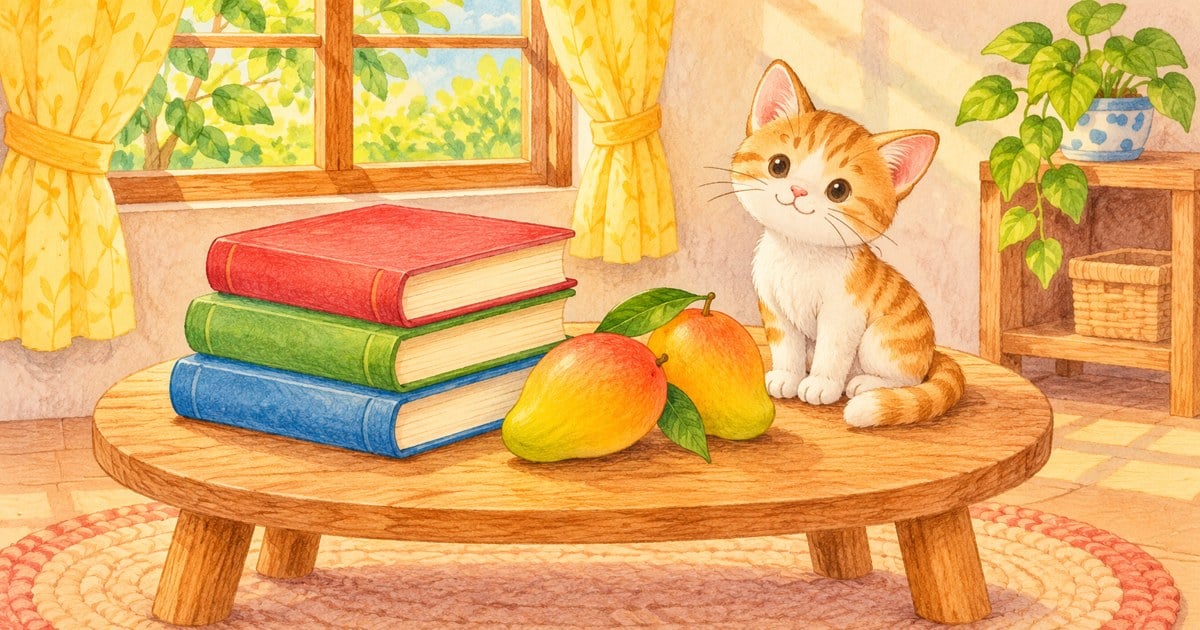
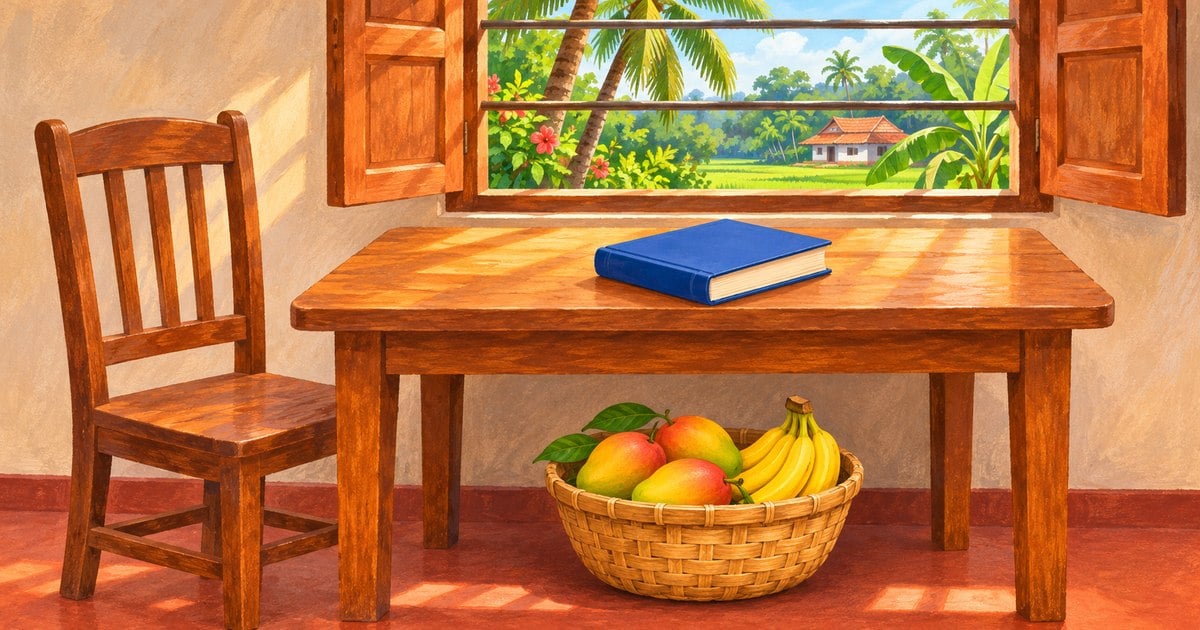
You know ಪುಸ್ತಕ (pustaka) means “book”. Now put two books on a table. How do you say “books”, “my books” or “the books are here”? Small changes to the noun and verb let you say all three.
This chapter takes one idea at a time: more than one thing, who it belongs to, and where it is. Keep a book or bag beside you while you practise. It is easier to remember a sentence when you can see what you are talking about.
Reading note: Roman spellings are simple aids, not exact pronunciation. Aa, ee and oo mark long vowels here; Kannada also distinguishes short and long e and o. We do not use scholarly marks, so some distinct Kannada sounds share a Roman spelling. Read the Kannada alongside the aid. The examples use standard forms, which may be shortened in everyday speech.
1. One book, several books
A noun names something: a book, house, person or place. Many Kannada nouns form their plural with ಗಳು (galu).
| One | Reading aid | More than one | Reading aid | Meaning |
|---|---|---|---|---|
| ಪುಸ್ತಕ | pustaka | ಪುಸ್ತಕಗಳು | pustakagalu | book / books |
| ಚೀಲ | cheela | ಚೀಲಗಳು | cheelagalu | bag / bags |
| ಮನೆ | mane | ಮನೆಗಳು | manegalu | house / houses |
| ಮರ | mara | ಮರಗಳು | maragalu | tree / trees |
Read each pair aloud. Then make a small drawing of one bag and three bags and label them in Kannada. The point is to connect the ending to the change in meaning rather than memorize it as an isolated rule.
Do not add ಗಳು blindly to every noun. People and family words can use other forms, and some common words are irregular:
| One | More than one | Reading aids | Meaning |
|---|---|---|---|
| ಹುಡುಗ | ಹುಡುಗರು | huduga / hudugaru | boy / boys |
| ಅಕ್ಕ | ಅಕ್ಕಂದಿರು | akka / akkandiru | elder sister / elder sisters |
| ಮಗು | ಮಕ್ಕಳು | magu / makkalu | child / children |
Learn a new noun with its plural when possible. You will also meet plural-looking forms used for respect toward one person. That is why a respectful reference to a teacher does not necessarily mean several teachers.
2. This book and these books
Keep two sets of pointing words separate:
| Kannada | Reading aid | Meaning |
|---|---|---|
| ಇದು | idu | this, used on its own for a thing |
| ಇವು | ivu | these, used on their own for things |
| ಈ ಪುಸ್ತಕ | ee pustaka | this book |
| ಈ ಪುಸ್ತಕಗಳು | ee pustakagalu | these books |
| ಆ ಮನೆ | aa mane | that house |
| ಆ ಮನೆಗಳು | aa manegalu | those houses |
ಈ (ee) and ಆ (aa) go before nouns. Their forms stay the same in these singular and plural phrases. The noun shows the number.
Try saying “this bag” and “these bags”: ಈ ಚೀಲ (ee cheela) and ಈ ಚೀಲಗಳು (ee cheelagalu). Avoid putting ಇದು directly before a noun when you mean the single phrase “this book”. ಇದು ಪುಸ್ತಕ. is instead the complete sentence “This is a book.”
3. Put the owner first
Kannada puts words such as “my” and “your” before the thing owned.
| Kannada | Reading aid | Meaning |
|---|---|---|
| ನನ್ನ | nanna | my |
| ನಮ್ಮ | namma | our |
| ನಿನ್ನ | ninna | your, familiar singular |
| ನಿಮ್ಮ | nimma | your, polite or plural |
| ಅವನ | avana | his |
| ಅವಳ | avala | her |
| ಅವರ | avara | their; respectful his or her |
ನನ್ನ ಪುಸ್ತಕ (nanna pustaka) is “my book”. ನನ್ನ ಪುಸ್ತಕಗಳು (nanna pustakagalu) is “my books”. The owner word stays the same in this pair.
For named owners, learn the noun's joining form too. ಅನಿತಾಳ ಚೀಲ (anitaala cheela) means “Anita's bag”; ರಾಮನ ಮನೆ (raamana mane) means “Rama's house”. You cannot attach one identical ending to every name and noun.
Now make it a sentence: ಇದು ನನ್ನ ಚೀಲ. (idu nanna cheela.), “This is my bag.” There is no need to insert a separate word for “is” in this identification pattern.
4. At home, at school
English often puts a small word before a noun: “in the house”, “at school”. Kannada commonly puts a location ending onto the noun.
| Place | Location form | Reading aid | Meaning |
|---|---|---|---|
| ಮನೆ | ಮನೆಯಲ್ಲಿ | maneyalli | in the house; at home |
| ಶಾಲೆ | ಶಾಲೆಯಲ್ಲಿ | shaaleyalli | at/in school |
| ಅಂಗಡಿ | ಅಂಗಡಿಯಲ್ಲಿ | angadiyalli | in/at the shop |
| ಪುಸ್ತಕ | ಪುಸ್ತಕದಲ್ಲಿ | pustakadalli | in the book |
Notice that the join changes. You get ಯ in ಮನೆಯಲ್ಲಿ, but ದ in ಪುಸ್ತಕದಲ್ಲಿ. For a beginner, learning the complete location form is more useful than guessing every joining rule.
Try ಚೀಲ ಶಾಲೆಯಲ್ಲಿ ಇದೆ. (cheela shaaleyalli ide.), “The bag is at school.” Then replace ಶಾಲೆಯಲ್ಲಿ with ಮನೆಯಲ್ಲಿ. You have moved the bag without changing the rest of the sentence.
5. One thing is here; several things are here
Use ಇದೆ (ide) with a singular non-human subject and ಇವೆ (ive) with a plural non-human subject in these location and existence sentences.
| Kannada | Reading aid | English |
|---|---|---|
| ಚೀಲ ಇಲ್ಲಿ ಇದೆ. | cheela illi ide. | The bag is here. |
| ಚೀಲಗಳು ಇಲ್ಲಿ ಇವೆ. | cheelagalu illi ive. | The bags are here. |
| ಅಂಗಡಿಯಲ್ಲಿ ಪುಸ್ತಕ ಇದೆ. | angadiyalli pustaka ide. | There is a book in the shop. |
| ಅಂಗಡಿಯಲ್ಲಿ ಪುಸ್ತಕಗಳು ಇವೆ. | angadiyalli pustakagalu ive. | There are books in the shop. |
With people, use the appropriate personal form instead: ಅವಳು ಶಾಲೆಯಲ್ಲಿ ಇದ್ದಾಳೆ. (avalu shaaleyalli iddaale.), “She is at school.” See the first grammar chapter for those endings.
For absence, use ಇಲ್ಲ (illa): ಚೀಲ ಇಲ್ಲಿ ಇಲ್ಲ. (cheela illi illa.), “The bag is not here.” Compare ಇದು ಚೀಲ ಅಲ್ಲ. (idu cheela alla.), “This is not a bag.” The first denies presence; the second denies what something is.
6. Say what you have with you
One useful possession pattern is ನನ್ನ ಬಳಿ (nanna bali), “with me”, followed by the thing and a form of “be”.
- ನನ್ನ ಬಳಿ ಪೆನ್ ಇದೆ. (nanna bali pen ide.) “I have a pen with me.”
- ನನ್ನ ಬಳಿ ಎರಡು ಪೆನ್ನುಗಳು ಇವೆ. (nanna bali eradu pennugalu ive.) “I have two pens with me.”
- ನನ್ನ ಬಳಿ ಪೆನ್ ಇಲ್ಲ. (nanna bali pen illa.) “I do not have a pen with me.”
This is particularly useful for something in your possession now. Kannada has other ways of expressing possession, including patterns for family relationships and lasting ownership. Do not turn this one useful expression into a rule for every English “have”.
To ask politely, say ನಿಮ್ಮ ಬಳಿ ಪೆನ್ ಇದೆಯೇ? (nimma bali pen ideye?), “Do you have a pen with you?”
7. Practise with your own belongings
- Make ಪುಸ್ತಕ plural.
- Say “our house”.
- Say “these bags” as a noun phrase.
- Complete: ಚೀಲಗಳು ಇಲ್ಲಿ ____.
- Say “The bag is at home.”
- Say “I have a pen with me.”
- Choose ಅಲ್ಲ or ಇಲ್ಲ: “The bag is not here.”
Answers
- ಪುಸ್ತಕಗಳು (pustakagalu).
- ನಮ್ಮ ಮನೆ (namma mane).
- ಈ ಚೀಲಗಳು (ee cheelagalu).
- ಇವೆ (ive).
- ಚೀಲ ಮನೆಯಲ್ಲಿ ಇದೆ. (cheela maneyalli ide.)
- ನನ್ನ ಬಳಿ ಪೆನ್ ಇದೆ. (nanna bali pen ide.)
- ಇಲ್ಲ: ಚೀಲ ಇಲ್ಲಿ ಇಲ್ಲ. (cheela illi illa.)
Finish with a small speaking task. Name something you own, say where it is, and change the sentence to describe two of them. Go slowly enough to notice both the noun ending and the final verb.
Continue your Kannada practice with these lessons:
Grammar references: Kannada Language Chair, JNU: nouns, cases, present tense and questions and negatives. Explanations and exercises prepared for LangFastPro.