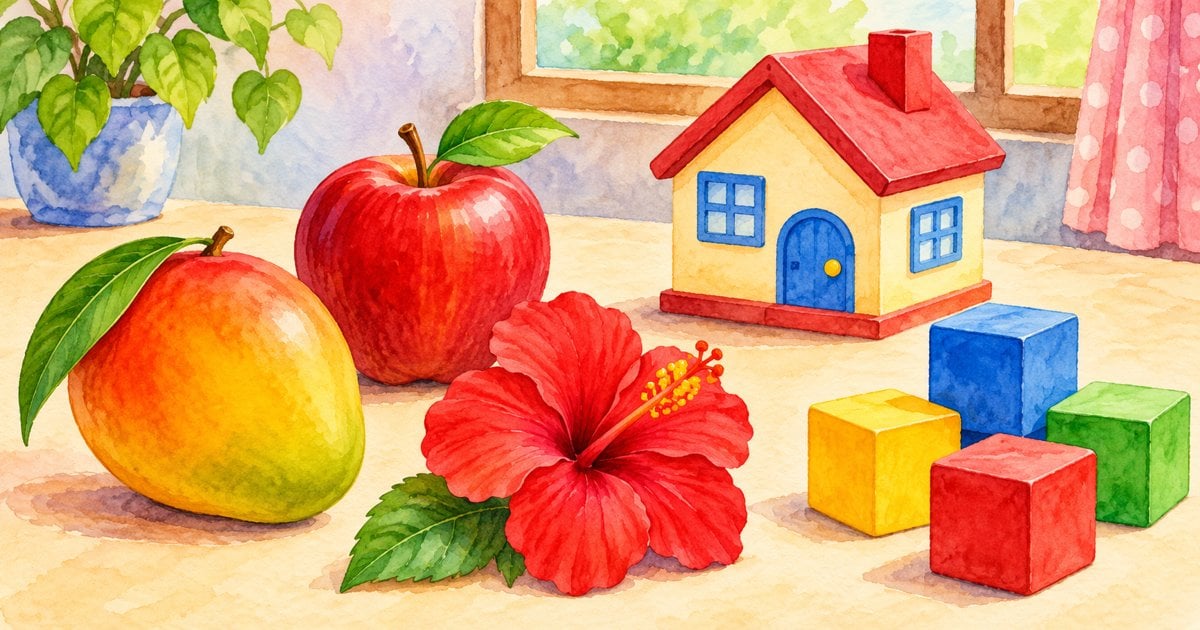
अक्षर पहचानें, आवाज़ बोलें, फिर अपना पहला शब्द पढ़ें।
Look at आम: aam, meaning mango. Those two letters are a useful place to start. We will learn how they work, then build up to words such as नल, किताब and फूल.
हिंदी वर्णमाला को छोटे हिस्सों में सीखें: पहले स्वर, फिर मात्राएँ, फिर व्यंजनों के समूह। हर हिस्से में अक्षर बोलें, एक उदाहरण पढ़ें और छोटा अभ्यास करें।
We will work through the Hindi alphabet in small steps: vowels, vowel signs, consonant families, then words and sentences. Keep the chart nearby and say the examples aloud. You can return to a row whenever you need it.
Hindi uses the Devanagari script (देवनागरी) and is written left to right. The horizontal line above many letters is called the shirorekha (शिरोरेखा). Notice how it joins letters in words such as किताब.
इस गाइड में Roman रूप कैसे पढ़ें / How to read the Roman cues
- a = अ, aa = आ, i = इ, ee = ई, u = उ, oo = ऊ. The a is roughly the first sound in “about,” not the English letter name “A.”
- aa, ee, oo लंबी स्वर-ध्वनियों के संकेत हैं। / These spellings help you notice the longer vowels.
- ख = kha में h हवा का संकेत है। / In pairs such as ka/kha, the h marks a puff of breath.
- ट और त जैसे कुछ अलग अक्षरों के Roman रूप यहाँ एक जैसे हैं। जीभ की स्थिति से फर्क समझें। / Some different Hindi sounds share a simple Roman cue here. Use the mouth-position notes to distinguish them.
Roman spellings and English comparisons are guides, not exact substitutes for listening. One useful rule to remember now: नल is nal, not nala. A consonant read alone includes an a, but that vowel is not spoken everywhere inside a word. We will practice this below.
1. हिंदी वर्णमाला चार्ट (Your Hindi alphabet map)
| समूह / Group | अक्षर / Letters |
|---|---|
| स्वर / Vowels | अ आ इ ई उ ऊ ऋ ए ऐ ओ औ |
| क-वर्ग / Ka group | क ख ग घ ङ |
| च-वर्ग / Cha group | च छ ज झ ञ |
| ट-वर्ग / Retroflex group | ट ठ ड ढ ण |
| त-वर्ग / Dental group | त थ द ध न |
| प-वर्ग / Pa group | प फ ब भ म |
| अन्य व्यंजन / Other consonants | य र ल व श ष स ह |
इस चार्ट से शुरुआत करें: 11 स्वर और 33 मूल व्यंजन, कुल 44। अभी एक-एक समूह पहचानें। अं, अः, ड़, ढ़ और संयुक्त रूप हम आगे देखेंगे।
Start with 11 vowels and 33 basic consonants: 44 in all. Learn one row at a time. We will meet signs, additional letters and consonant combinations later.
2. स्वर (Swar): Meet the vowels
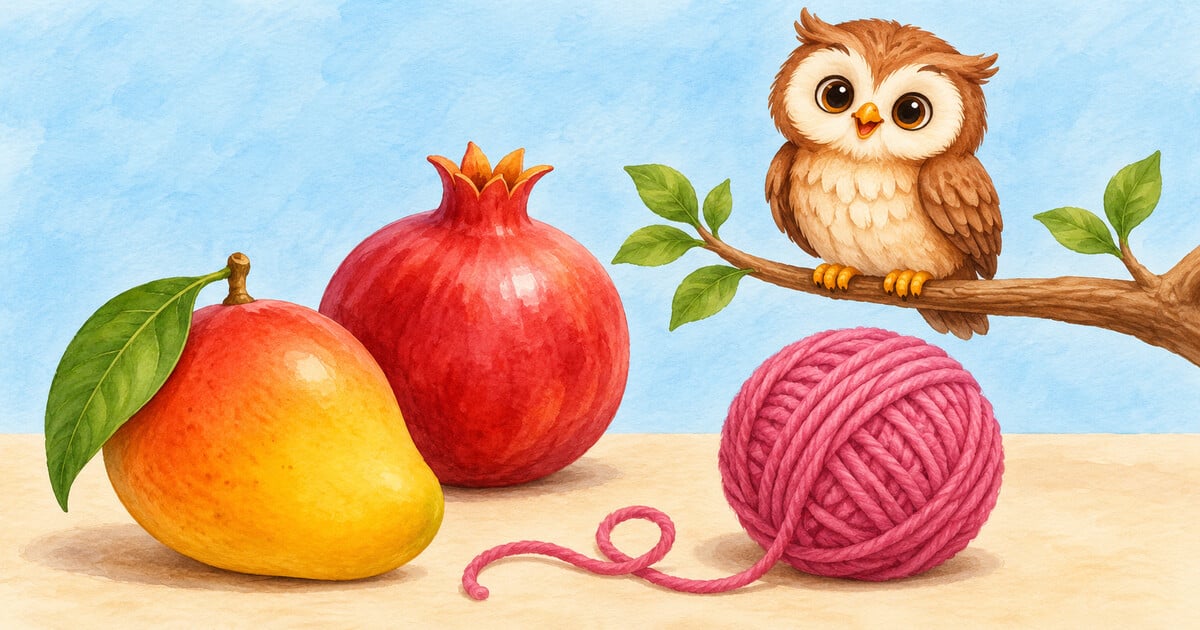
आम, इमली, उल्लू। पहले इन शब्दों का शुरुआती स्वर देखें: आ, इ, उ।
Aam, imlee, ulloo: mango, tamarind, owl. Each starts with a vowel written as a full letter. A swar (स्वर) is a vowel sound. When a vowel combines with a consonant, Hindi usually shows it with a smaller sign called a matra (मात्रा). We will try that next.
For now, read one row, say the example, then look back at its first letter.
| स्वर / Vowel | Roman रूप | आवाज़ / Sound cue | उदाहरण / Example | English meaning |
|---|---|---|---|---|
| अ | a | हल्की अ; लगभग “about” का पहला स्वर / an unstressed uh-like sound | अनार (anaar) | pomegranate |
| आ | aa | मुँह खुला रखकर लंबा आ / a long open aa | आम (aam) | mango |
| इ | i | छोटी इ; लगभग “sit” का स्वर / a brief i sound | इमली (imlee) | tamarind |
| ई | ee | लंबी ई; लगभग “see” का स्वर / a long ee sound | ईख (eekh) | sugarcane |
| उ | u | छोटी उ; लगभग “put” का स्वर / a brief u sound | उल्लू (ulloo) | owl |
| ऊ | oo | लंबी ऊ; लगभग “food” का स्वर / a long oo sound | ऊन (oon) | wool |
| ऋ | ri | आधुनिक हिंदी में सामान्यतः रि / usually ri in modern Hindi | ऋतु (ritu) | season |
| ए | e | एक की ए, आवाज़ स्थिर रखें / the steady vowel in एक | एक (ek) | one |
| ऐ | ai | ऐनक की ऐ, सामान्य हिंदी में खुला ए-जैसा स्वर / the open vowel in ऐनक | ऐनक (ainak) | glasses |
| ओ | o | ओस की ओ, होंठ गोल रखें / the steady rounded vowel in ओस | ओस (os) | dew |
| औ | au | औरत की औ, ओ से अधिक खुला स्वर / the more open rounded vowel in औरत | औरत (aurat) | woman |
सुनने की छोटी बात / A listening tip: ए और ओ को स्थिर रखें। ऐ और औ के Roman रूप ai और au हैं, लेकिन सामान्य मानक हिंदी में ये अक्सर एक-एक स्थिर स्वर होते हैं, दो अलग स्वर नहीं। क्षेत्र और शब्द के अनुसार कुछ अंतर मिलेंगे।
Keep ए and ओ steady. Although we write ai and au, common Standard Hindi often uses a single steady vowel for ऐ and औ. Pronunciation can vary by region and word. The traditional vowel ऋ is usually read ri in modern Hindi; Sanskrit pronunciation follows its own conventions.
आपकी बारी: पहला अक्षर पहचानें (Your turn: Spot the vowel)
तालिका ढकें। इन शब्दों में पहला स्वर कौन-सा है? / Cover the table. Which vowel begins each word?
- आम
- इमली
- ऊन
- एक
जवाब / Answers: आ (aa), इ (i), ऊ (oo), ए (e). Now point to each letter in the chart and say it again.
3. मात्राएँ (Matras): Change one letter, change the sound
अब क से मिलिए। इसे अकेले ka पढ़ते हैं। इसके साथ ा लगाएँ: का (kaa)। एक छोटी मात्रा ने स्वर बदल दिया।
Meet क (ka). Its default vowel is अ (a), so it needs no separate sign for that sound. Add ा, and you get का (kaa). A matra changes the vowel attached to the consonant.
क → का → कि → की
ka → kaa → ki → kee
Keep your eye on क as you read the table. The consonant stays the same; the vowel changes.
| स्वर / Vowel | मात्रा / Sign | क के साथ / With क | उदाहरण / Example | English meaning |
|---|---|---|---|---|
| अ | अलग चिह्न नहीं / no separate sign | क (ka) | नल (nal) | tap |
| आ | ा | का (kaa) | कागज़ (kaagaz) | paper |
| इ | ि | कि (ki) | किताब (kitaab) | book |
| ई | ी | की (kee) | खीर (kheer) | rice pudding |
| उ | ु | कु (ku) | गुलाब (gulaab) | rose |
| ऊ | ू | कू (koo) | फूल (phool) | flower |
| ऋ | ृ | कृ (kri) | कृपा (kripaa) | kindness or favor |
| ए | े | के (ke) | केला (kelaa) | banana |
| ऐ | ै | कै (kai) | पैसा (paisaa) | money |
| ओ | ो | को (ko) | मोर (mor) | peacock |
| औ | ौ | कौ (kau) | पौधा (paudhaa) | plant |
इ और ई की मात्रा (The i and ee signs)
कि में ि दिखाई तो क के बाईं ओर देती है, लेकिन पढ़ते समय क की आवाज़ पहले आती है: ki, ik नहीं। की में ी दाईं ओर लगती है और स्वर लंबा है।
In कि, the sign is displayed before क but the vowel is pronounced after the consonant: ki, not ik. In की, the sign is on the right and the vowel is long.
अभ्यास के लिए यह पंक्ति धीरे पढ़ें: क, का, कि, की, कु, कू, कृ, के, कै, को, कौ।
Read the row slowly, keeping each vowel distinct: ka, kaa, ki, kee, ku, koo, kri, ke, kai, ko, kau.
छोटा प्रयोग (Try it with म)
म = ma. Now add the signs you have just learned:
- म + ा = मा (maa)
- म + ि = मि (mi)
- म + ी = मी (mee)
- म + ु = मु (mu)
- म + ू = मू (moo)
खुद करें / Your turn: Write मे, मो and मै, then say them before checking.
जवाब / Answers: me, mo, mai. The same vowel-sign pattern works with many other consonants.
4. व्यंजन (Vyanjan): Learn the consonant families
व्यंजनों का क्रम याद करने में मुँह की स्थिति मदद करती है। क-वर्ग में जीभ का पिछला भाग काम करता है; प-वर्ग तक आते-आते होंठ काम करने लगते हैं।
The consonant rows have a useful pattern. They move through different parts of the mouth, from the back of the tongue to the lips.
The first five rows follow this order:
बिना कंपन → हवा के साथ → कंपन के साथ → कंपन और साँस → नासिक्य
Unvoiced → unvoiced with a puff → voiced → voiced with breath → nasal
क और ग बोलते समय शुरुआती व्यंजन पर ध्यान दें, बाद के अ पर नहीं। ग की शुरुआत में गले का कंपन महसूस करें।
“Voiced” means the vocal folds vibrate. With your fingertips resting lightly on your throat, say ka, then ga, focusing on the initial consonant rather than the following a. Feel the voicing at the start of ga; the vowel in both syllables is voiced.
पहले हवा महसूस करें (First, feel the breath)
अपनी हथेली मुँह के सामने रखें। क–ख, फिर प–फ बोलें। दूसरे अक्षर पर हवा अधिक महसूस करने की कोशिश करें।
Hold your palm in front of your mouth and try ka–kha, then pa–pha. The second sound has more breath. Keep the volume comfortable: ख is not simply a louder क.
Practice the same contrast in ग–घ, च–छ, ज–झ, ट–ठ, ड–ढ, त–थ, द–ध, ब–भ. For the voiced pairs, the breath accompanies a voiced sound.
क-वर्ग: क ख ग घ ङ (Back of the tongue)
इन ध्वनियों में जीभ का पिछला भाग काम करता है। / These sounds use the back of the tongue.
| अक्षर / Letter | Roman रूप | आवाज़ / Sound cue | उदाहरण / Example | English meaning |
|---|---|---|---|---|
| क | ka | बिना तेज़ हवा का k / k without a strong puff | किताब (kitaab) | book |
| ख | kha | k के साथ हवा / k with a puff of breath | खरगोश (khargosh) | rabbit |
| ग | ga | गले में कंपन वाला g / voiced g, as in “go” | गमला (gamlaa) | flowerpot |
| घ | gha | g के साथ साँस / voiced g with breath | घर (ghar) | house |
| ङ | nga | जीभ पीछे रखकर नासिक्य ध्वनि / ng, as at the end of “sing” | अङ्ग, आम वर्तनी अंग (ang) | limb or body part |
च-वर्ग: च छ ज झ ञ (The cha family)
| अक्षर / Letter | Roman रूप | आवाज़ / Sound cue | उदाहरण / Example | English meaning |
|---|---|---|---|---|
| च | cha | च की आवाज़ / ch, roughly as in “chair” | चम्मच (chammach) | spoon |
| छ | chha | च के साथ अधिक हवा / ch with a stronger puff | छाता (chhaataa) | umbrella |
| ज | ja | ज की आवाज़ / j, roughly as in “jam” | जलेबी (jalebee) | a spiral-shaped sweet |
| झ | jha | ज के साथ साँस / voiced j with breath | झूला (jhoolaa) | swing |
| ञ | nya | तालु के पास नासिक्य ध्वनि / a palatal nasal, roughly ny | पञ्च, आम वर्तनी पंच (panch) | a council member |
ङ और ञ को अभी पहचानना सीखें। इनके लिए परिचित शुरुआती शब्द कम मिलते हैं। ऊपर अङ्ग और पञ्च पारंपरिक संस्कृत-आधारित रूप हैं; रोज़ की हिंदी में अंग और पंच लिखें।
For ङ and ञ, focus on recognition first. Familiar Hindi words rarely begin with them. The traditional Sanskrit-based spellings अङ्ग and पञ्च show the letters clearly; अंग and पंच are the usual Hindi spellings. The cues ng and ny help identify the nasal sounds, but the nasal in पंच is not always a clearly separate ny-like sound in everyday speech.
ट-वर्ग: ट ठ ड ढ ण (Tongue back)
ट, ठ, ड, ढ और ण में जीभ की नोक पीछे मोड़कर मुँह की छत की ओर ले जाएँ। इन्हें त-वर्ग से अलग सुनें।
Curl the tongue tip back toward the roof of the mouth. These sounds differ from the dental letters in the next table.
| अक्षर / Letter | Roman रूप | आवाज़ / Sound cue | उदाहरण / Example | English meaning |
|---|---|---|---|---|
| ट | ta | जीभ पीछे, बिना तेज़ हवा / tongue-back t | टमाटर (tamaatar) | tomato |
| ठ | tha | ट के साथ हवा / tongue-back t with a puff | ठंड (thand) | cold |
| ड | da | जीभ पीछे, गले में कंपन / tongue-back voiced d | डिब्बा (dibbaa) | box |
| ढ | dha | ड के साथ साँस / tongue-back voiced d with breath | ढोल (dhol) | drum |
| ण | na | जीभ पीछे, आवाज़ नाक से / tongue-back nasal n | गणित (ganit) | mathematics |
त-वर्ग: त थ द ध न (Tongue near the teeth)
त, थ, द, ध और न के अभ्यास में जीभ की नोक ऊपरी दाँतों के पास रखें। अंग्रेज़ी का t इन ध्वनियों का ठीक-ठीक नमूना नहीं है।
Place the tongue tip at or near the upper teeth. English t and d are only rough comparisons.
| अक्षर / Letter | Roman रूप | आवाज़ / Sound cue | उदाहरण / Example | English meaning |
|---|---|---|---|---|
| त | ta | दाँतों के पास t, बिना तेज़ हवा / dental t | तरबूज़ (tarbooz) | watermelon |
| थ | tha | दाँतों के पास t और हवा / dental t with a puff | थाली (thaalee) | plate |
| द | da | दाँतों के पास, गले में कंपन वाला d / voiced dental d | दाल (daal) | lentils |
| ध | dha | द के साथ साँस / voiced dental d with breath | धनुष (dhanush) | bow |
| न | na | दाँतों के पास नासिक्य ध्वनि / dental nasal n | नल (nal) | tap |
थ का th, अंग्रेज़ी “thin” जैसा नहीं है। ध भी अंग्रेज़ी “this” की शुरुआत जैसा नहीं है। पहले त या द बोलें, फिर उसी आवाज़ के साथ हवा जोड़ने का अभ्यास करें।
The th in tha is not the sound in “thin,” and dha is not the first sound in “this.” Start with the Hindi dental t or d and add breath.
रुककर देखें: ट या त? (Pause: Tongue back or teeth?)
ट–त, ठ–थ, ड–द, ढ–ध धीरे बोलें। ट-वर्ग में जीभ पीछे जाती है; त-वर्ग में दाँतों के पास।
Say the pairs slowly. Move the tongue rather than just changing how loudly you speak. The simple Roman cues ta, tha, da, dha look the same for both rows here, so always check the Hindi letter.
किस शब्द में कौन-सा अक्षर है? / Which letter do you see?
टमाटर starts with ट. तरबूज़ starts with त.
प-वर्ग: प फ ब भ म (Use your lips)
प, फ, ब, भ और म होंठों की मदद से बनते हैं। / These sounds use the lips.
| अक्षर / Letter | Roman रूप | आवाज़ / Sound cue | उदाहरण / Example | English meaning |
|---|---|---|---|---|
| प | pa | बिना तेज़ हवा का p / p without a strong puff | पतंग (patang) | kite |
| फ | pha | प के साथ हवा / p with a puff | फल (phal) | fruit |
| ब | ba | गले में कंपन वाला b / voiced b | बतख (batakh) | duck |
| भ | bha | ब के साथ साँस / voiced b with breath | भालू (bhaaloo) | bear |
| म | ma | होंठ बंद, आवाज़ नाक से / m with the lips together | मछली (machhlee) | fish |
फ का पारंपरिक उच्चारण ph है। फ़ का उच्चारण अंग्रेज़ी f जैसा है। बोलचाल में कुछ वक्ता फ वाले शब्दों में भी f बोलते हैं; अक्षर पहचानते समय फ और फ़ का फर्क देखें।
The traditional sound of फ is aspirated p. फ़ represents f. Some speakers also use f in words written with फ, but the two written forms remain distinct.
य से ह तक (Ya to ha)
| अक्षर / Letter | Roman रूप | आवाज़ / Sound cue | उदाहरण / Example | English meaning |
|---|---|---|---|---|
| य | ya | y, जैसे “yes” की शुरुआत / y as in “yes” | याद (yaad) | memory |
| र | ra | जीभ की नोक का हल्का स्पर्श / a brief tongue tap | रोटी (rotee) | flatbread |
| ल | la | l की आवाज़ / l as in “leaf” | लड्डू (laddoo) | a round sweet |
| व | va | होंठ और ऊपरी दाँत पास, अंग्रेज़ी v और w के बीच जैसी आवाज़ / often between English v and w | वन (van) | forest |
| श | sha | sh, जैसे “ship” / sh as in “ship” | शेर (sher) | lion |
| ष | sha | पारंपरिक रूप में जीभ पीछे; आधुनिक हिंदी में अक्सर श जैसा / traditionally tongue-back sh, often the same as श in Hindi | भाषा (bhaashaa) | language |
| स | sa | s, जैसे “sun” / s as in “sun” | साबुन (saabun) | soap |
| ह | ha | गले से हल्की साँस / a breathy h sound | हाथ (haath) | hand |
श और ष अलग अक्षर हैं, लेकिन आधुनिक हिंदी में कई वक्ता दोनों को श की तरह बोलते हैं।
श and ष are different letters, but many Hindi speakers pronounce both with a sh sound.
छोटा अभ्यास: शब्द से अक्षर खोजें (Find the letter)
Read घर, झूला, भालू, शेर. Find each first letter in the tables, then say its standalone sound.
जवाब / Answers: घ (gha), झ (jha), भ (bha), श (sha). In each row, read the sound cue once more before moving on.
5. छोटे चिह्न, ज़रूरी फर्क (Nasal signs, breath and halant)
अब ऊपर और नीचे लगे छोटे चिह्न देखें। माँ में ँ आ की आवाज़ को नासिक्य बनाता है। क् में ् व्यंजन का अ हटाता है।
Small marks do important work. In माँ, ँ nasalizes the vowel. In क्, ् removes the built-in a. These marks are not extra vowels in our list of 11.
| चिह्न / Sign | नाम / Name | पढ़ने का संकेत / Reading cue | उदाहरण / Example |
|---|---|---|---|
| ं | अनुस्वार / anusvaar | प्रसंग के अनुसार नासिक्य व्यंजन या स्वर का नासिकीकरण / a nasal consonant or, in some spellings, a nasalized vowel | अंक (ank), number |
| ँ | चंद्रबिंदु / chandrabindu | स्वर को नाक से भी बोलें; पूरा n न जोड़ें / nasalize the vowel rather than adding a full n | माँ (maa), mother |
| ः | विसर्ग / visarg | अः को सावधान पाठ में हल्की h-जैसी साँस के साथ पढ़ते हैं / a breath-like release in careful recitation | दुःख (dukh), sorrow |
दुःख जैसे शब्द का सामान्य हिंदी उच्चारण उसकी हर लिखित निशानी को अलग-अलग बोलकर नहीं बनता। विसर्ग के नियम संस्कृत पाठ में अधिक विस्तार से मिलते हैं।
Ordinary Hindi pronunciation does not sound out every written sign separately. दुःख is commonly read dukh. Sanskrit recitation has more detailed visarga rules.
हलंत ् व्यंजन का अ हटाने का लिखित चिह्न है: क् केवल k है, जबकि क को अकेले पढ़ने पर ka कहते हैं। दो व्यंजन मिलने पर उनका संयुक्त रूप बन सकता है।
The halant ् removes the inherent vowel in writing: क् is k, while the standalone letter क is read ka. Consonants can then combine.
अभ्यास / Try it: Compare मा and माँ. In माँ, let the vowel resonate through the nose too. The cue maa is written the same here, so look for the chandrabindu; do not add a separate full n.
6. ड़, ढ़ और नुक़्ता (Meet the dotted letters)
नुक़्ता अक्षर के नीचे लगने वाला बिंदु है। उससे अक्षर की ध्वनि बदल सकती है। ड़ और ढ़, ड और ढ के समान नहीं हैं। लड़का और पढ़ना जैसे सामान्य शब्दों में इन्हें पहचानें।
The dot called a nukta can change a letter's sound. ड़ and ढ़ differ from ड and ढ and occur in everyday words.
यहाँ ड़ और र दोनों को सरल Roman में “ra” लिखा गया है, लेकिन उनकी आवाज़ें अलग हैं।
ड़ and र both use the simple Roman spelling “ra” here, but they are different sounds.
| अक्षर / Letter | Roman संकेत | आवाज़ / Sound cue | उदाहरण / Example | English meaning |
|---|---|---|---|---|
| ड़ | ra | जीभ पीछे से हल्का फटकारा / a tongue-back flap | लड़का (larkaa) | boy |
| ढ़ | rha | ड़ की ध्वनि के साथ साँस / a tongue-back flap with breath | पढ़ना (parhnaa) | to read |
| ज़ | za | z, जैसे “zoo” / z as in “zoo” | ज़मीन (zameen) | ground or land |
| फ़ | fa | नीचे का होंठ ऊपरी दाँतों के पास / f as in “fan” | फ़ोन (fon) | phone |
| क़ | qa | क से और पीछे बनने वाली q ध्वनि / q made farther back than k | क़िला (qilaa) | fort |
| ख़ | kha | मुँह के पीछे रगड़ती हवा / a friction sound at the back of the mouth | ख़बर (khabar) | news |
| ग़ | ga | गले में कंपन के साथ पीछे की रगड़ / the voiced counterpart of ख़ | ग़ज़ल (gazal) | a form of poetry |
ख़ और ग़ के Roman रूप यहाँ सरल रखे गए हैं; उनका उच्चारण समझने के लिए आवाज़ के संकेत देखें। कई हिंदी वक्ता क़, ख़ और ग़ को क्रमशः क, ख और ग के करीब बोलते हैं।
The Roman forms for ख़ and ग़ are simplified here; use the sound cues for their pronunciation. Many Hindi speakers pronounce क़, ख़ and ग़ closer to क, ख and ग.
7. संयुक्त व्यंजन (When consonants join)
हलंत का काम याद है? क् में अ नहीं है। जब क् और ष जुड़ते हैं, तो क्ष बनता है।
Remember the halant? क् has no vowel of its own. Combine क् + ष, and you get क्ष. This is a conjunct, a joined consonant form.
क्ष, त्र, ज्ञ और श्र में दो-दो व्यंजन जुड़े हैं। कई स्कूल चार्ट इन्हें अंत में अलग दिखाते हैं, लेकिन ये 33 मूल व्यंजनों से अलग बने संयुक्त रूप हैं।
These four familiar combinations often appear at the end of school charts. They are combinations of consonants, rather than four additional basic consonants.
| रूप / Form | जोड़ / Parts | पढ़ने का संकेत / Reading cue | उदाहरण / Example | English meaning |
|---|---|---|---|---|
| क्ष | क् + ष | ksha | क्षमा (kshamaa) | forgiveness |
| त्र | त् + र | tra | त्रिकोण (trikon) | triangle |
| ज्ञ | ज् + ञ | हिंदी में अक्सर gya / often gya in Hindi | ज्ञान (gyaan) | knowledge |
| श्र | श् + र | shra | श्रम (shram) | work or labor |
ज्ञ का लिखा हुआ जोड़ ज् + ञ है, लेकिन ज्ञान को सामान्य हिंदी में अक्सर gyaan कहा जाता है। केवल अक्षरों के Roman नाम जोड़ने से हर शब्द का उच्चारण नहीं मिलता।
ज्ञ is written as ज् + ञ, while ज्ञान is often pronounced gyaan in Hindi. Combining Roman letter labels does not always produce a word's spoken form.
एक और जोड़: नमस्ते (One more combination)
स् + त = स्त, as in नमस्ते (namaste), hello. Read न + म + स् + ते and keep s next to t, without inserting an extra a between them. Joined letters can change shape, but looking for their parts helps.
8. अब शब्द पढ़ें (Put the letters to work)
हर शब्द में पहले अक्षर देखें, फिर मात्रा खोजें, फिर पूरी आवाज़ मिलाएँ। पहले Roman रूप ढककर पढ़ने की कोशिश करें।
For each word, spot the letters, check the vowel signs, then blend the sounds. Cover the Roman cue for your first attempt.
पहला शब्द: आम (Your first word: Mango)
- आ = aa, an independent vowel.
- म is ma when read alone. At the end of this word, its a is not pronounced, so you hear m.
- आ + म → aam → mango.
अब यही तरीका नल पर आज़माएँ: न + ल → nal, tap. इसे nala न पढ़ें।
Now try नल: न + ल → nal, meaning tap, not nala.
अगला शब्द: किताब (Next word: Book)
- कि = क with ि → ki. The sign appears on the left, but the vowel is spoken after k.
- ता = त with ा → taa.
- ब at the end of this word is b, without a final a.
- कि + ता + ब → kitaab → book.
अपनी पढ़ाई जाँचें (Check your reading)
| हिंदी शब्द / Word | हिस्से / Parts | पढ़ें / Read | English meaning |
|---|---|---|---|
| घर | घ + र | ghar | house |
| दाल | दा + ल | daal | lentils |
| फूल | फू + ल | phool | flower |
| केला | के + ला | kelaa | banana |
| मोर | मो + र | mor | peacock |
| पानी | पा + नी | paanee | water |
| झूला | झू + ला | jhoolaa | swing |
| नमस्ते | न + म + स् + ते | namaste | hello |
अ की आवाज़ कब हटती है? / What happens to the built-in a?
हिंदी में शब्द के अंत और कभी-कभी बीच में भी अ की आवाज़ नहीं बोली जाती। इसे schwa deletion कहते हैं। नल, घर, किताब में आखिरी अ नहीं सुनाई देता। लेकिन इसे हर अक्षर से अपने-आप न हटाएँ; शब्द को सुनकर और उदाहरणों से सीखें।
Hindi often leaves the inherent a unspoken at the end of a word and sometimes inside it. This is called schwa deletion. The final a is silent in nal, ghar and kitaab, but you should not remove every built-in vowel. Use familiar words and spoken examples to learn the pattern.
9. तीन छोटी पंक्तियाँ पढ़ें (Read three short sentences)
पहले हिंदी पढ़ें। फिर Roman रूप और अर्थ से मिलाएँ। / Read the Hindi first, then check the cue and meaning.
1. आम मीठा है।
Aam meethaa hai.
The mango is sweet.
ध्यान दें / Notice: मी has the long ee sign, and ठा has aa. The letter ठ belongs to the tongue-back row.
2. यह किताब है।
Yah kitaab hai.
This is a book.
ध्यान दें / Notice: You already decoded किताब. Look for कि before reading the whole word.
3. मुझे पानी चाहिए।
Mujhe paanee chaahiye.
I need water.
ध्यान दें / Notice: पा + नी = paanee. In मुझे, look for ु in मु and े in झे.
अब पहली पंक्ति फिर पढ़ें। क्या इस बार आपको Roman रूप कम देखना पड़ा?
Read the first sentence again. Can you rely a little more on the Hindi letters this time?
10. छोटा अभ्यास और जवाब (A quick practice round)
A. सही मात्रा चुनें (Choose the vowel sign)
- To make kee from क, add ि or ी?
- To make koo from क, add ु or ू?
- To make ko from क, add े or ो?
B. अक्षर पहचानें (Recognize the letter)
- Which has a stronger puff of air: क or ख?
- Which uses the tongue near the upper teeth: ट or त?
- Which word shows chandrabindu: माँ or मोर?
C. बिना मदद पढ़ें (Read without the Roman cues)
- नल
- फूल
- किताब
- नमस्ते
जवाब / Answers
- ी → की (kee)
- ू → कू (koo)
- ो → को (ko)
- ख (kha)
- त (ta), the dental sound
- माँ (maa), mother, with a nasalized vowel
- nal, tap
- phool, flower
- kitaab, book
- namaste, hello
जिस सवाल में रुकना पड़ा, उसी अक्षर या मात्रा पर लौटें। फिर जवाब ढककर दोबारा पढ़ें।
If you paused on an answer, return to that letter or sign, then cover the answer and try again.
11. थोड़ा रोज़ पढ़ें और लिखें (A small daily routine)
- एक पंक्ति बोलें / Say one row. Choose a group such as क ख ग घ ङ. Look, say, then point to each letter without reading its Roman cue.
- तीन अक्षर लिखें / Write three letters. Copy their shapes carefully. Check the headline, lower strokes and spaces against the model.
- मात्रा बदलें / Change the vowel. Turn क into का, कि, की, कु and कू. Say each sound as you write.
- तीन शब्द पढ़ें / Read three words. Try आम, किताब and फूल. In आम, the vowel is a full letter. In किताब and फूल, look for the attached signs.
- बिना देखे जाँचें / Check from memory. Cover the chart, write the three letters again, then compare.
बच्चे के साथ अभ्यास कर रहे हैं? एक बार में एक फर्क चुनें, जैसे इ–ई या त–ट। लिखावट और उच्चारण के लिए उसकी पाठ्यपुस्तक या शिक्षक का नमूना साथ रखें।
If you are helping a child, work on one contrast at a time, such as इ–ई or त–ट. Use the child's textbook or a teacher's model for letter shapes and pronunciation.
आम सवाल (Frequently asked questions)
हिंदी वर्णमाला में कितने अक्षर होते हैं (Hindi varnamala mein kitne akshar hote hain)
इस पेज में 11 स्वर + 33 मूल व्यंजन = 44 का आधार लिया गया है। ड़ और ढ़ जोड़ने पर 46 होते हैं। उसी सूची में अं, अः और क्ष, त्र, ज्ञ, श्र भी अलग गिनें, तो कुल 52 होता है।
Our basic count is 11 vowels + 33 consonants = 44. Including ड़ and ढ़ gives 46. Adding अं, अः and the four combinations क्ष, त्र, ज्ञ, श्र produces a total of 52.
फर्क इस बात से आता है कि किताब स्वर-चिह्नों, अतिरिक्त अक्षरों और संयुक्त रूपों को कहाँ गिनती है। 44 और 52 एक ही तरह की सूची के दो जवाब नहीं हैं। परीक्षा में अपनी पाठ्यपुस्तक की सूची और शिक्षक की बताई गिनती अपनाएँ।
The total depends on what the chart includes. These are different counting conventions, not two totals for an identical set. For schoolwork, use the list and convention taught in class.
हिंदी वर्णमाला कैसे लिखें (How to write Hindi varnamala)
बाएँ से दाएँ लिखें। पहले स्वर क्रम से लिखें, फिर व्यंजनों के समूह। हर अक्षर का आकार नमूने से मिलाएँ और बाद में मात्रा जोड़ें। कि में इ की मात्रा बाईं ओर दिखती है, फिर भी उच्चारण ki होता है।
Write from left to right. Start with the vowels, then the consonant groups. Compare each shape with a model before adding vowel signs. Remember that कि displays its vowel sign on the left but is pronounced ki.
क्या हिंदी वर्णमाला अंग्रेज़ी के A to Z जैसी है (Does Hindi match English A to Z)
नहीं। हिंदी की अपनी वर्णमाला और क्रम है। अंग्रेज़ी के 26 अक्षरों से हिंदी के सभी अक्षरों का एक-से-एक मेल नहीं बनता। “Hindi alphabet in English” की तालिका में Roman रूप केवल पढ़ने की मदद करते हैं।
Hindi has its own letter order. There is no one-to-one match with the 26 English letters. A “Hindi alphabet in English” chart uses Roman letters as pronunciation aids.
आगे क्या पढ़ें (Choose your next lesson)
अब एक छोटी उपलब्धि देखें: आम में स्वर पहचानना, किताब में मात्रा पढ़ना और नमस्ते में संयुक्त अक्षर देखना। इन्हीं कौशलों को आगे के शब्दों में इस्तेमाल करें।
You have practiced three useful steps: recognizing the vowel in आम, reading the signs in किताब, and spotting the joined consonants in नमस्ते. Keep using those steps as you read.
- More reading rules: Read Hindi From Zero: Every Letter, Sound & Rule.
- Try a story: प्यासा कौआ (The Thirsty Crow). Read a short passage, then check its English translation.
- Another story to practice with: लालची कुत्ता (The Greedy Dog). Look for letters and vowel signs you recognize.
पहली बार में पूरी कहानी पढ़ना ज़रूरी नहीं। एक शब्द पहचानें, उसे बोलें, फिर अगला शब्द आज़माएँ।
Start with one word you recognize. Say it aloud, then try the next.