छोटे वाक्यों से हिंदी सीखें।
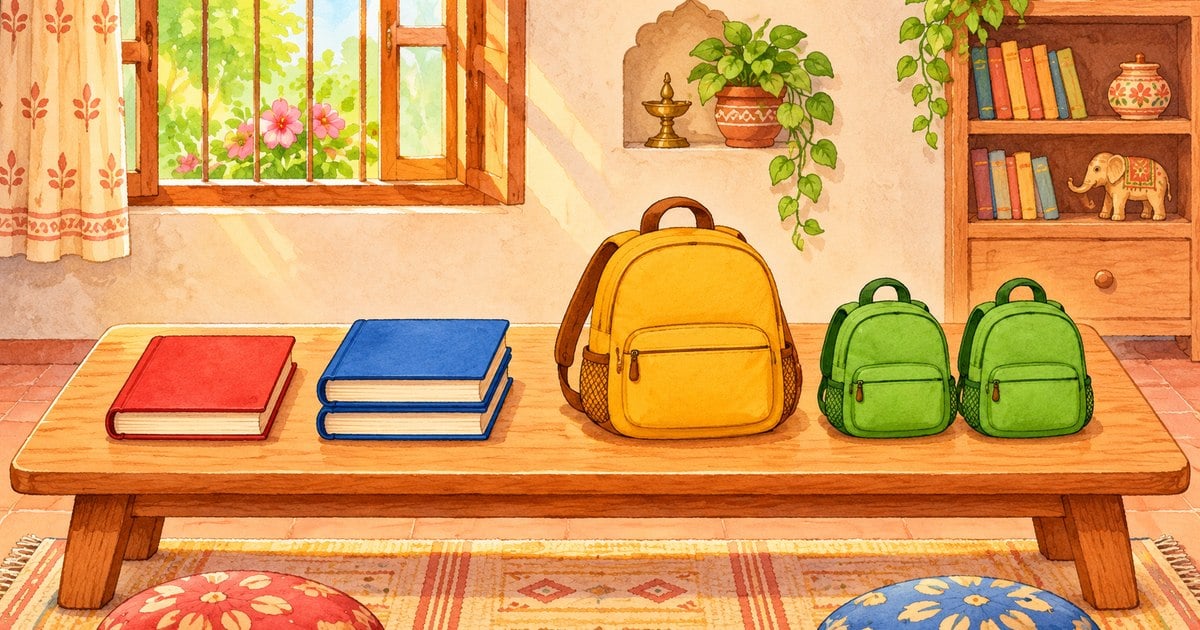
Point to a book. Say यह किताब है। Yah kitaab hai. This is a book.
That is a complete Hindi sentence. You already have a person or thing to talk about, a word that identifies it, and है at the end. In this lesson, you will turn that little pattern into introductions, questions and short answers.
If the letters still feel unfamiliar, keep the Hindi alphabet chart open beside you. Read each Hindi example aloud before looking at the English.
1. Start with this and that
| Hindi | Reading aid | Meaning |
|---|---|---|
| यह किताब है। | Yah kitaab hai. | This is a book. |
| वह घर है। | Vah ghar hai. | That is a house. |
| ये किताबें हैं। | Ye kitaaben hain. | These are books. |
| वे घर हैं। | Ve ghar hain. | Those are houses. |
यह / वह usually point to something near / farther away. ये / वे are the corresponding plural forms. The distinction is useful, but these words can also refer to people already mentioned.
You will often hear यह and वह pronounced more like yeh and voh. We use yah and vah here to keep the reading aids close to the spelling.
Notice the last word: one book है, several books हैं. The nasal sound in हैं matters. Our simple Roman spellings are reminders, not a complete pronunciation system: ee and oo mark long i/u sounds, while long a is usually aa (familiar endings such as mera keep a single a), and an n sometimes reminds you of a nasal vowel rather than a separate n sound.
Try it now
Point to one book, then to two books. Say both sentences from the table. You changed both the pointing word and the verb, not just the noun.
2. I am, you are, we are
Hindi does not use one unchanged word for English “am,” “is” and “are.” Learn the pronoun and its present-tense form together.
| Hindi | Reading aid | Meaning |
|---|---|---|
| मैं हूँ | main hoon | I am |
| तुम हो | tum ho | You are, familiar |
| आप हैं | aap hain | You are, respectful or plural |
| यह है / वह है | yah hai / vah hai | This/he/she is; that/he/she is |
| हम हैं | ham hain | We are |
| ये हैं / वे हैं | ye hain / ve hain | These/they are; those/they are |
For a new adult acquaintance or a teacher, आप is a useful respectful choice. तुम belongs in relationships where familiarity is welcome. You will also encounter तू, but it can sound intimate, devotional or insulting depending on context. Leave it out of your first introductions.
Hindi does not have separate third-person pronouns that correspond neatly to English “he” and “she.” Context tells you who वह refers to. Respectful reference to one person can use a plural form, so वे हैं does not always mean several people.
3. Introduce yourself without a speech
मेरा नाम मीना है।
Mera naam Meena hai.
My name is Meena.
मैं यहाँ हूँ।
Main yahaan hoon.
I am here.
हम तैयार हैं।
Ham taiyaar hain.
We are ready.
आप कहाँ हैं?
Aap kahaan hain?
Where are you?
Try your own name in the first sentence. Keep है there: the sentence says that your name is something. It does not use हूँ simply because you are talking about yourself.
Compare मैं मीना हूँ। Main Meena hoon. I am Meena. Here मैं is the subject, so the ending is हूँ.
4. Put the action towards the end
A useful starting order is person + thing + action. Hindi word order can move around for emphasis, but this ordinary pattern will take you a long way.
मीना पानी पीती है।
Meena paanee peetee hai.
Meena drinks water.
रवि पानी पीता है।
Ravi paanee peeta hai.
Ravi drinks water.
| Part | What it tells you |
|---|---|
| मीना / रवि | Who does it |
| पानी | What they drink |
| पीती है / पीता है | The action |
The ending changes with the subject. These examples describe a habit or general action. They do not mean “is drinking right now.” You can notice that contrast without memorising all the tenses today.
For this lesson, build your own sentences mainly with हूँ, हो, है, हैं. Verb endings deserve practice in their own right, rather than a hurried rule that claims one form works for everybody.
5. Ask a yes-or-no question
Add क्या at the beginning of a statement:
यह आपकी किताब है।
Yah aapkee kitaab hai.
This is your book.
क्या यह आपकी किताब है?
Kya yah aapkee kitaab hai?
Is this your book?
You do not swap the word order as English does with “is this.” Keep the rest of the sentence in place.
Useful answers:
- हाँ। Haan. Yes.
- जी हाँ। Jee haan. Yes, politely.
- नहीं। Naheen. No.
- जी नहीं। Jee naheen. No, politely.
In a different position, क्या can mean “what”: यह क्या है? Yah kya hai? What is this? Learn these two questions side by side so you can hear the difference.
6. Say what something is not
Put नहीं before है in this pattern:
यह मेरी किताब नहीं है।
Yah meree kitaab naheen hai.
This is not my book.
मैं घर पर नहीं हूँ।
Main ghar par naheen hoon.
I am not at home.
Keep the matching ending: मैं still takes हूँ. Do not replace every ending with है when you add “not.”
A little conversation you can actually use
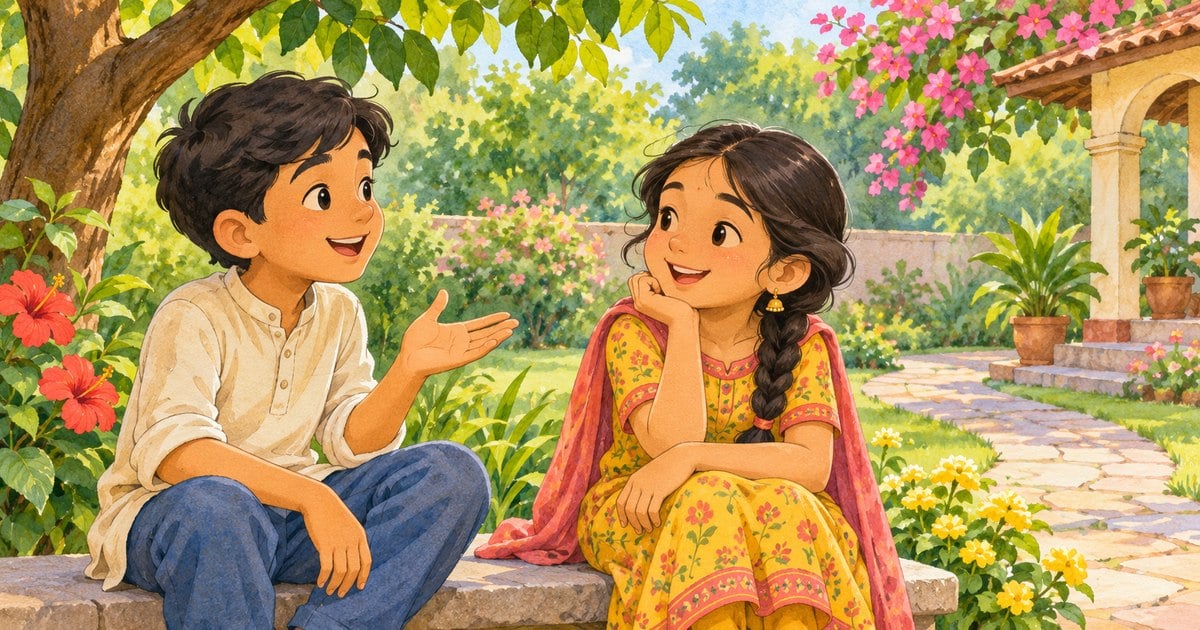
A: नमस्ते। आपका नाम क्या है?
Namaste. Aapka naam kya hai?
Hello. What is your name?
B: मेरा नाम मीना है।
Mera naam Meena hai.
My name is Meena.
A: क्या यह आपकी किताब है?
Kya yah aapkee kitaab hai?
Is this your book?
B: जी हाँ। यह मेरी किताब है।
Jee haan. Yah meree kitaab hai.
Yes. This is my book.
Replace the name and practise both parts. You have made an introduction, asked a question and answered it without a long grammar speech.
Practice
- Fill in: मैं यहाँ ___।
- Fill in: आप तैयार ___।
- Turn यह किताब है। into a yes-or-no question.
- Ask “What is this?”
- Make यह मेरी किताब है। negative.
- Choose a respectful “you” for greeting an unfamiliar adult.
Answers
- मैं यहाँ हूँ। Main yahaan hoon. I am here.
- आप तैयार हैं। Aap taiyaar hain. You are ready.
- क्या यह किताब है? Kya yah kitaab hai? Is this a book?
- यह क्या है? Yah kya hai?
- यह मेरी किताब नहीं है। Yah meree kitaab naheen hai.
- आप, with हैं in these present-tense patterns.
Continue with these Hindi lessons:
Grammar reference: Rupert Snell's Hindi Skeleton Grammar, Hindi Urdu Flagship, especially pronouns, questions and simple sentence patterns. Examples and practice in this lesson are newly written for LangFastPro.