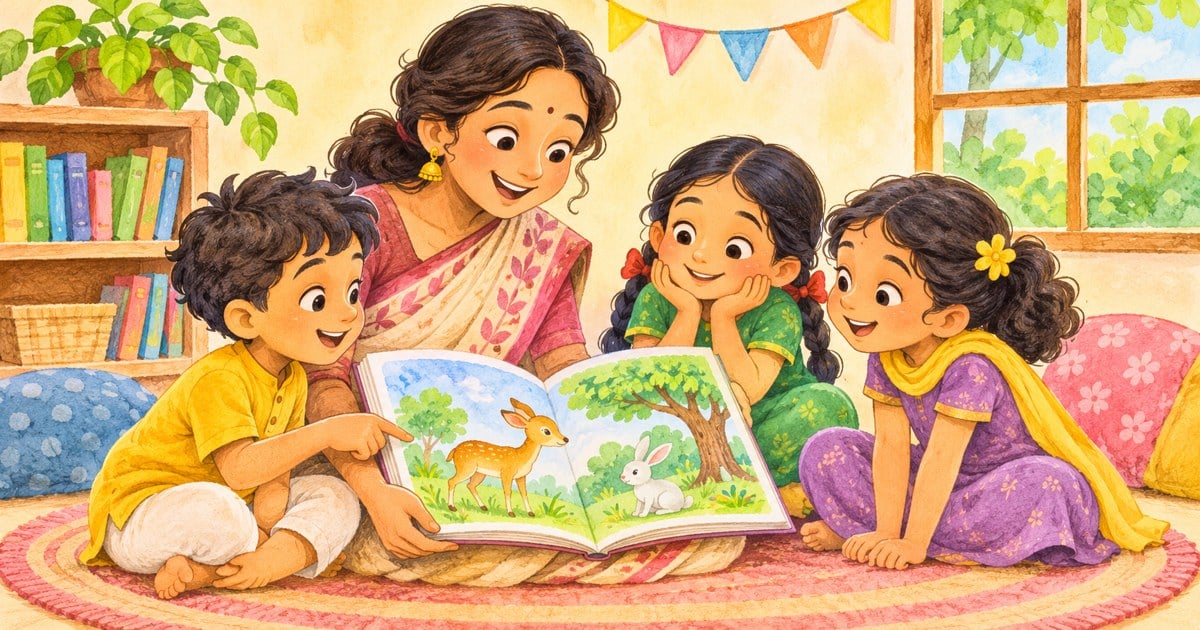
ಕನ್ನಡದಲ್ಲಿ ಮಾತನಾಡಲು ಕಲಿಯೋಣ.

Point to a book and say ಇದು ಪುಸ್ತಕ. (idu pustaka.) You have just made a complete Kannada sentence: “This is a book.” There is no missing word to worry about. Kannada does not always need a separate equivalent of English “is”.
In this chapter, you will introduce yourself, ask a few useful questions and see why the ending of a Kannada verb changes with its subject. Read the examples aloud, then cover the English column and try them again.
Reading note: Roman spellings are simple pronunciation aids, not an exact transcription. We use aa, ee and oo for long vowels; Kannada also distinguishes short and long e and o. Different Kannada consonants sometimes share one Roman spelling here. Keep the Kannada script as your reference. These examples use clear standard forms; everyday speech can shorten them.
1. Start with this and that
| Kannada | Reading aid | English |
|---|---|---|
| ಇದು ಪುಸ್ತಕ. | idu pustaka. | This is a book. |
| ಅದು ಶಾಲೆ. | adu shaale. | That is a school. |
| ಇದು ನನ್ನ ಚೀಲ. | idu nanna cheela. | This is my bag. |
| ಅದು ನಿಮ್ಮ ಮನೆ. | adu nimma mane. | That is your house. |
In these identification sentences, put the thing you are identifying first, followed by its description. You do not need to translate every English word separately. Kannada also has no direct equivalent of the English articles “a” and “the” in this pattern.
Try swapping just the last word: ಪುಸ್ತಕ (pustaka, book), ಚೀಲ (cheela, bag), ಮನೆ (mane, house). Make three sentences about things around you. Start with objects you can point to so that the meaning is easy to remember.
2. Meet the pronouns
A pronoun stands in for a person or thing. Start with the forms you will actually need in a first conversation.
| Kannada | Reading aid | Meaning |
|---|---|---|
| ನಾನು | naanu | I |
| ನಾವು | naavu | we |
| ನೀನು | neenu | you, singular and familiar |
| ನೀವು | neevu | you, plural or polite singular |
| ಅವನು | avanu | he, familiar |
| ಅವಳು | avalu | she, familiar |
| ಅವರು | avaru | they, people; also respectful he or she |
| ಅದು | adu | that; it |
| ಅವು | avu | those; they, non-human |
A useful politeness habit: choose ನೀವು when speaking to an adult you do not know well. When referring respectfully to someone, ಅವರು can mean one person. Do not assume it always means a group.
The nearby forms include ಇವರು (ivaru, this person respectfully/these people) and ಇವು (ivu, these things). You can learn those once the first table feels familiar.
3. Say who you are
| Kannada | Reading aid | English |
|---|---|---|
| ನನ್ನ ಹೆಸರು ಅನಿತಾ. | nanna hesaru anitaa. | My name is Anita. |
| ನಾನು ವಿದ್ಯಾರ್ಥಿ. | naanu vidyaarthi. | I am a student. |
| ಇವರು ನಮ್ಮ ಶಿಕ್ಷಕರು. | ivaru namma shikshakaru. | This is our teacher, respectfully. |
Replace ಅನಿತಾ with your name. Then practise the question ನಿಮ್ಮ ಹೆಸರು ಏನು? (nimma hesaru enu?), “What is your name?”
Notice ನನ್ನ (nanna, my), ನಮ್ಮ (namma, our) and ನಿಮ್ಮ (nimma, your). They come before the name or thing. The next chapter will give you more practice with possession.
4. Where are you? Now the verb matters
For someone's presence or location, Kannada uses forms of ಇರು (iru, to be). Learn the subject and its matching form together.
| Kannada | Reading aid | English |
|---|---|---|
| ನಾನು ಇಲ್ಲಿ ಇದ್ದೇನೆ. | naanu illi iddene. | I am here. |
| ನಾವು ಇಲ್ಲಿ ಇದ್ದೇವೆ. | naavu illi iddeve. | We are here. |
| ನೀನು ಇಲ್ಲಿ ಇದ್ದೀಯೆ. | neenu illi iddeeye. | You are here, familiar. |
| ನೀವು ಇಲ್ಲಿ ಇದ್ದೀರಿ. | neevu illi iddeeri. | You are here, polite or plural. |
| ಅವನು ಇಲ್ಲಿ ಇದ್ದಾನೆ. | avanu illi iddaane. | He is here. |
| ಅವಳು ಇಲ್ಲಿ ಇದ್ದಾಳೆ. | avalu illi iddaale. | She is here. |
| ಅವರು ಇಲ್ಲಿ ಇದ್ದಾರೆ. | avaru illi iddaare. | They are here; he/she is here respectfully. |
| ಪುಸ್ತಕ ಇಲ್ಲಿ ಇದೆ. | pustaka illi ide. | The book is here. |
ಇಲ್ಲಿ (illi) means “here”; ಅಲ್ಲಿ (alli) means “there”. Change ಇಲ್ಲಿ to ಅಲ್ಲಿ and read the table again. You have changed the location without changing who is present.
This is agreement: the verb form matches the subject. Do not use ಇದೆ for every English “is”. In these examples, a book takes ಇದೆ, while a person takes the appropriate personal form.
5. Build a small action sentence
A common Kannada order is person + object + verb. English puts the verb earlier, so give yourself a moment to build the Kannada order.
ನಾನು ಕನ್ನಡ ಕಲಿಯುತ್ತೇನೆ.
naanu kannada kaliyuttene.
“I learn Kannada.”
Here, ನಾನು is the person, ಕನ್ನಡ is what they learn, and ಕಲಿಯುತ್ತೇನೆ is the verb. Compare:
| Kannada | Reading aid | English |
|---|---|---|
| ಅವನು ಕನ್ನಡ ಕಲಿಯುತ್ತಾನೆ. | avanu kannada kaliyuttaane. | He learns Kannada. |
| ಅವಳು ಕನ್ನಡ ಕಲಿಯುತ್ತಾಳೆ. | avalu kannada kaliyuttaale. | She learns Kannada. |
| ನೀವು ಕನ್ನಡ ಕಲಿಯುತ್ತೀರಿ. | neevu kannada kaliyutteeri. | You learn Kannada. |
These forms can also refer to the future when the context makes that clear. For now, practise them as general statements. You do not need to learn every tense before you can say something useful.
6. Ask, then answer
| Kannada | Reading aid | English |
|---|---|---|
| ಇದು ಏನು? | idu enu? | What is this? |
| ಅವರು ಯಾರು? | avaru yaaru? | Who are they? / Who is that person, respectfully? |
| ನೀವು ಎಲ್ಲಿ ಇದ್ದೀರಿ? | neevu elli iddeeri? | Where are you? |
| ಇದು ಚೀಲವೇ? | idu cheelave? | Is this a bag? |
The first three use question words: ಏನು, ಯಾರು and ಎಲ್ಲಿ. The last adds a question ending to ಚೀಲ. Another common question ending is aa; you will hear different forms in conversation. Learn a complete example before trying to add an ending to every word.
For “Is this a bag?”, you can answer ಹೌದು, ಇದು ಚೀಲ. (haudu, idu cheela.), “Yes, this is a bag.” Or say ಇದು ಚೀಲ ಅಲ್ಲ. (idu cheela alla.), “This is not a bag.”
7. Your turn
Try these without looking back. Write the Kannada first; use the reading aids only when you need them.
- Say “This is my bag.”
- Ask someone's name politely.
- Complete: ಅವಳು ಇಲ್ಲಿ ____.
- Change “I learn Kannada” to “You learn Kannada”, politely.
- Ask “What is this?”
- Explain why ಅವರು does not always mean several people.
Answers
- ಇದು ನನ್ನ ಚೀಲ. (idu nanna cheela.)
- ನಿಮ್ಮ ಹೆಸರು ಏನು? (nimma hesaru enu?)
- ಇದ್ದಾಳೆ (iddaale).
- ನೀವು ಕನ್ನಡ ಕಲಿಯುತ್ತೀರಿ. (neevu kannada kaliyutteeri.)
- ಇದು ಏನು? (idu enu?)
- It can refer respectfully to one person, as well as to several people.
Before moving on, introduce yourself aloud, point to one object and ask one question. That is a useful first conversation, even if you still read slowly.
Keep building your Kannada with these lessons:
Grammar references: Kannada Language Chair, JNU: pronouns, verbless sentences, present tense and questions. Explanations and exercises prepared for LangFastPro.