कहानियों से हिंदी सीखें।
1. Hindi Story
दाल का दाना — A Grain of Dal
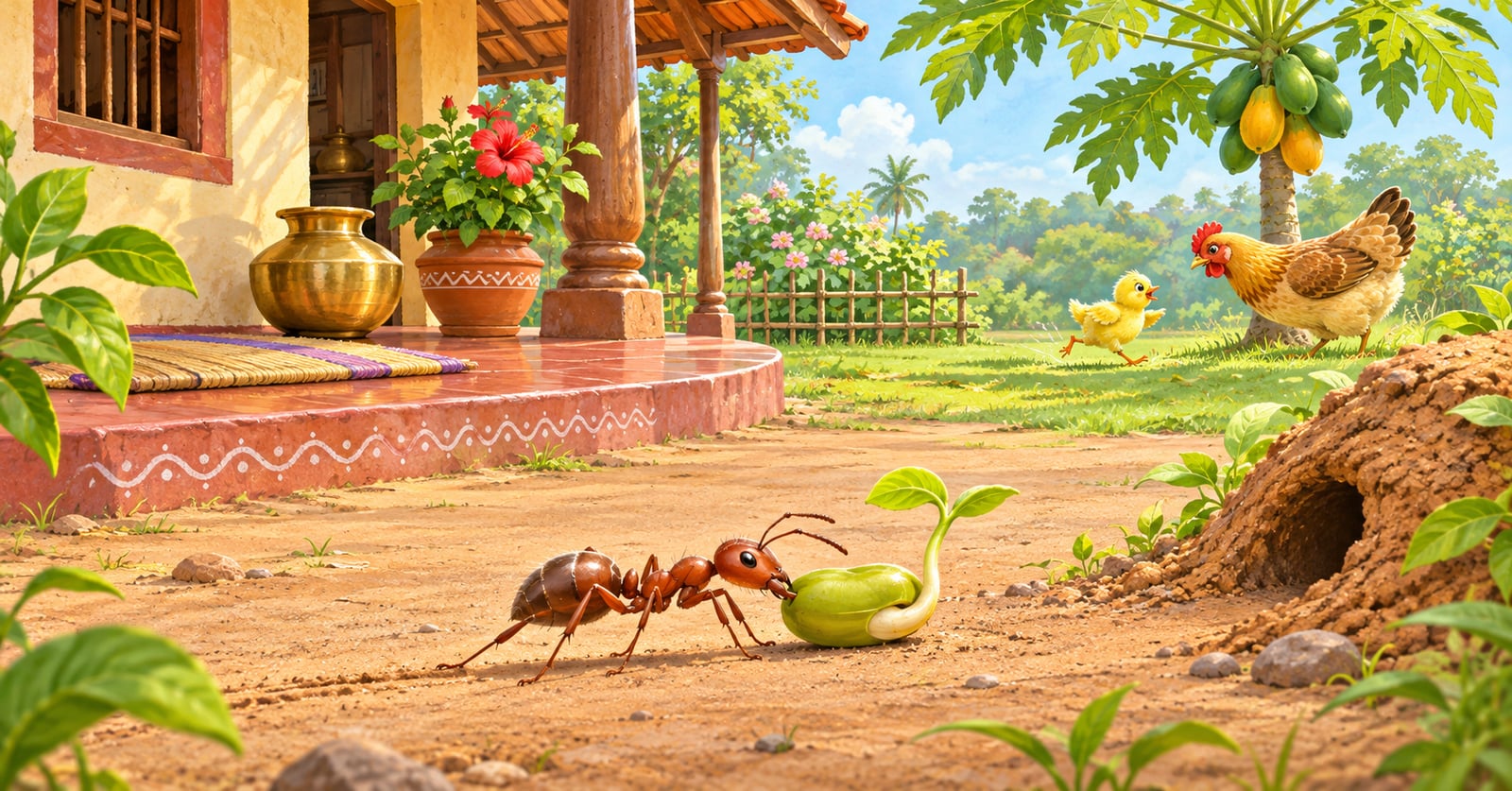
एक चींटी खाने की खोज में घूम रही थी। चींटी को रसोई घर में अंकुरित मूँग दाल का एक दाना मिला।
चींटी उसे उठाने लगी। लेकिन दाना बहुत भारी था। उठा नहीं। चींटी दाने को खींचकर अपने घर की ओर ले जाने लगी। उसका घर वहाँ से बहुत दूर था।
रास्ते में नल से पानी गिर कर बह रहा था। चींटी को लगा, कोई नदी बह रही हो। चींटी ने किसी तरह उस नदी को पार किया।
चींटी दाने को लेकर आगे बढ़ी तो रास्ते में उसे बाल्टी मिली। चींटी दाने को लेकर बाल्टी पर चढ़ने लगी। लेकिन फिसलकर गिर पड़ी। वह फिर चढ़ने लगी। लेकिन फिर फिसलकर गिर पड़ी।
वहीं उसे एक दूसरी चींटी मिली। दोनों ने एक दूसरे का मुँह छुआ। बात की। उन्होंने बाल्टी का चक्कर लगाया और दाने को खींचकर घर ले चलीं।
रास्ते में एक औरत झाड़ू लगा रही थी। झाड़ू के ज़ोर से चींटी दूर जा गिरी और दाना कहीं और जा गिरा। चींटी उसे खोजने लगी। फिर उसे लेकर घर चल पड़ी। उसका घर अभी बहुत दूर था।
दरवाज़े के पास एक कुत्ता सो रहा था। जब चींटी उसके मुँह के पास से गुज़री तो कुत्ते को ज़ोर से छींक आ गयी। चींटी उछलकर दूर जा गिरी। दाना कुत्ते के मुँह के पास जा गिरा।
चींटी सँभलकर कुत्ते की नाक के पास पहुँची। कुत्ते ने एक आँख खोलकर चींटी को देखा। चींटी दाल के दाने को लेकर फिर घर की ओर चल पड़ी। उसका घर अभी भी बहुत दूर था।
बाहर बरामदे के पास एक चूज़ा घूम रहा था। वह जगह-जगह ज़मीन में अपनी चोंच मार रहा था। अचानक उसे दाल का दाना दिखायी पड़ा। उसने दाने पर चोंच मारी लेकिन उसका निशाना चूक गया।
चूज़े ने फिर चोंच मारी। चींटी ने सोचा, अब तो दाना गया। तब तक चूज़े की माँ पपीते के पेड़ के नीचे से चिल्लाई-कुड़ कुड़ कुड़ कुड़। चूज़ा उधर भागा। चींटी अपना दाना लेकर फिर से चल पड़ी। उसका घर... अरे! उसका घर तो अब सामने दिख रहा था।
2. Sentence-by-Sentence Translation
| # | Hindi (हिंदी) | English Translation |
|---|---|---|
| 1 | एक चींटी खाने की खोज में घूम रही थी। | An ant was wandering around looking for food. |
| 2 | चींटी को रसोई घर में अंकुरित मूँग दाल का एक दाना मिला। | The ant found a sprouted mung bean in the kitchen. |
| 3 | चींटी उसे उठाने लगी। | The ant began to lift it. |
| 4 | लेकिन दाना बहुत भारी था। | But the bean was very heavy. |
| 5 | उठा नहीं। | It would not lift. |
| 6 | चींटी दाने को खींचकर अपने घर की ओर ले जाने लगी। | The ant began dragging the bean toward her home. |
| 7 | उसका घर वहाँ से बहुत दूर था। | Her home was very far from there. |
| 8 | रास्ते में नल से पानी गिर कर बह रहा था। | On the way, water was falling from a tap and flowing along. |
| 9 | चींटी को लगा, कोई नदी बह रही हो। | To the ant, it seemed as though a river was flowing. |
| 10 | चींटी ने किसी तरह उस नदी को पार किया। | The ant somehow crossed that river. |
| 11 | चींटी दाने को लेकर आगे बढ़ी तो रास्ते में उसे बाल्टी मिली। | As the ant went ahead with the bean, she came across a bucket on the way. |
| 12 | चींटी दाने को लेकर बाल्टी पर चढ़ने लगी। | The ant began climbing the bucket with the bean. |
| 13 | लेकिन फिसलकर गिर पड़ी। | But she slipped and fell. |
| 14 | वह फिर चढ़ने लगी। | She began climbing again. |
| 15 | लेकिन फिर फिसलकर गिर पड़ी। | But again she slipped and fell. |
| 16 | वहीं उसे एक दूसरी चींटी मिली। | There she met another ant. |
| 17 | दोनों ने एक दूसरे का मुँह छुआ। | The two touched each other's mouths. |
| 18 | बात की। | They talked. |
| 19 | उन्होंने बाल्टी का चक्कर लगाया और दाने को खींचकर घर ले चलीं। | They went around the bucket and set off home, dragging the bean. |
| 20 | रास्ते में एक औरत झाड़ू लगा रही थी। | A woman was sweeping along the way. |
| 21 | झाड़ू के ज़ोर से चींटी दूर जा गिरी और दाना कहीं और जा गिरा। | The force of the broom sent the ant flying far away, and the bean landed somewhere else. |
| 22 | चींटी उसे खोजने लगी। | The ant began looking for it. |
| 23 | फिर उसे लेकर घर चल पड़ी। | Then she set off home with it. |
| 24 | उसका घर अभी बहुत दूर था। | Her home was still very far away. |
| 25 | दरवाज़े के पास एक कुत्ता सो रहा था। | A dog was sleeping near the door. |
| 26 | जब चींटी उसके मुँह के पास से गुज़री तो कुत्ते को ज़ोर से छींक आ गयी। | When the ant passed near his mouth, the dog let out a loud sneeze. |
| 27 | चींटी उछलकर दूर जा गिरी। | The ant was tossed far away. |
| 28 | दाना कुत्ते के मुँह के पास जा गिरा। | The bean landed near the dog's mouth. |
| 29 | चींटी सँभलकर कुत्ते की नाक के पास पहुँची। | The ant carefully reached the dog's nose. |
| 30 | कुत्ते ने एक आँख खोलकर चींटी को देखा। | The dog opened one eye and looked at the ant. |
| 31 | चींटी दाल के दाने को लेकर फिर घर की ओर चल पड़ी। | The ant set off toward home again with the grain of dal. |
| 32 | उसका घर अभी भी बहुत दूर था। | Her home was still very far away. |
| 33 | बाहर बरामदे के पास एक चूज़ा घूम रहा था। | Outside, a chick was wandering near the veranda. |
| 34 | वह जगह-जगह ज़मीन में अपनी चोंच मार रहा था। | He was pecking at the ground here and there. |
| 35 | अचानक उसे दाल का दाना दिखायी पड़ा। | Suddenly he spotted the grain of dal. |
| 36 | उसने दाने पर चोंच मारी लेकिन उसका निशाना चूक गया। | He pecked at the bean but missed his target. |
| 37 | चूज़े ने फिर चोंच मारी। | The chick pecked again. |
| 38 | चींटी ने सोचा, अब तो दाना गया। | The ant thought, now the bean is gone. |
| 39 | तब तक चूज़े की माँ पपीते के पेड़ के नीचे से चिल्लाई-कुड़ कुड़ कुड़ कुड़। | Just then, the chick's mother called from under the papaya tree: cluck, cluck, cluck, cluck. |
| 40 | चूज़ा उधर भागा। | The chick ran toward her. |
| 41 | चींटी अपना दाना लेकर फिर से चल पड़ी। | The ant set off again with her bean. |
| 42 | उसका घर... अरे! | Her home... Oh! |
| 43 | उसका घर तो अब सामने दिख रहा था। | Her home was now right there in front of her. |
3. Vocabulary
कुछ शब्द मूल रूप में दिए गए हैं। Some words appear in their base forms rather than their forms in the story.
| Hindi (हिंदी) | Transliteration | Part of Speech | English Meaning |
|---|---|---|---|
| चींटी | cheentee | Noun | ant |
| खोज | khoj | Noun | search |
| रसोई घर | rasoi ghar | Noun phrase | kitchen |
| अंकुरित | ankurit | Adjective | sprouted |
| मूँग | moong | Noun | mung bean |
| दाना | daana | Noun | a grain or seed; the bean in this story |
| भारी | bhaaree | Adjective | heavy |
| खींचना | kheenchna | Verb | to pull or drag |
| दूर | door | Adverb | far away |
| नल | nal | Noun | tap |
| पार करना | paar karna | Verb phrase | to cross |
| बाल्टी | baaltee | Noun | bucket |
| चढ़ना | charhna | Verb | to climb |
| फिसलना | phisalna | Verb | to slip |
| झाड़ू | jhaaroo | Noun | broom |
| छींक | chheenk | Noun | sneeze |
| सँभलकर | sanbhalkar | Adverb | carefully; taking care |
| चूज़ा | chooza | Noun | chick |
| चोंच | chonch | Noun | beak |
| निशाना | nishaana | Noun | target; aim |
| पपीता | papeeta | Noun | papaya |
| सामने | saamne | Adverb | in front |
पढ़ने की मदद: Reading help: aa, ee and oo mark long vowels. In charhna (चढ़ना), rh represents the quick curled-tongue sound with a puff of air; in jhaaroo (झाड़ू), r represents the related sound without that puff. These differ from the ordinary r in ghar (घर). The n in moong (मूँग) and munh (मुँह) helps mark a nasal vowel, not a separate full n sound.
Source: दाल का दाना by Sarvendra Vikram (© Pratham Books, 2016), published on StoryWeaver, CC BY 4.0; source disclaimer. Full narrative reproduced; book activities and source illustrations omitted. English translation, Roman reading aid and learning notes by LangFastPro.