نتعلّم العربية من القصص.
Section 1: Arabic Story
تُومْ، بَائِعُ المَوْزِ — Tom the Banana Seller
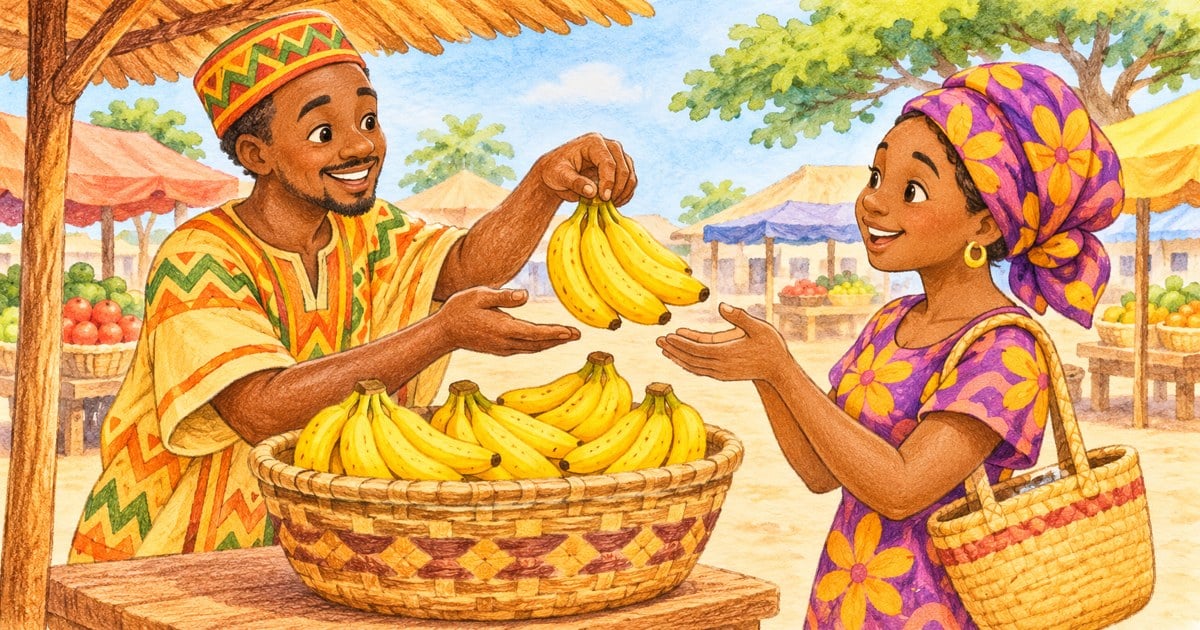
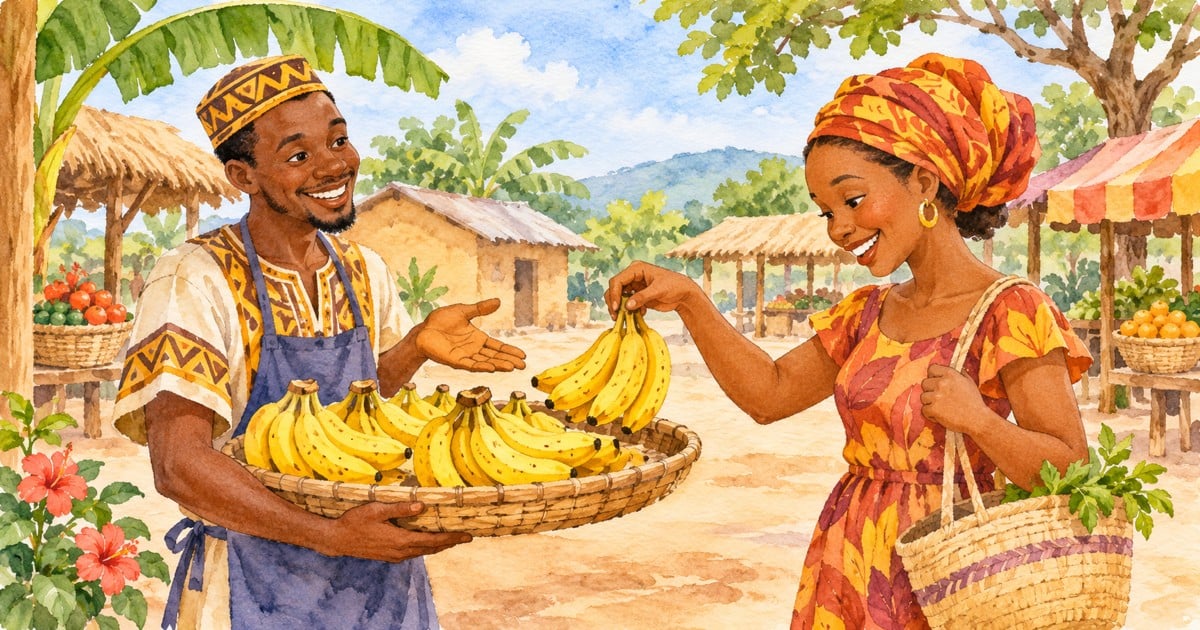
يَحْمِلُ توم طَبَقَ المَوْزِ النَّاضِجِ.
يَتَّجِهُ تُومْ إِلَى السُّوقِ لِبَيْعِ المَوْزِ.
النَّاسُ فِي السُّوقِ يَشْتَرُونَ الفَاكِهَة.
لَكِنْ لاَ أَحَدَ يَشْتَرِي مَوْزَاتِ تُومْ. إِنَّهُمْ يُحَبِّذُونَ شِرَاءَ الفَاكِهَةِ مِنَ النَّسَاءِ.
يَقُولُ النَّاسُ “فِي مُجْتَمَعِنَا لاَ يَبِيعُ الفَاكِهَةَ إِلاَّ النِّسَاءُ” وَيَتَسَاءَلُونَ “مَا نَوْعُ هَذَا الرَّجُلِ؟”
لَكِنَّ تُومْ لاَ يَسْتَسْلِمُ. هَا هُوَ يُنَادِي “اِشْتَرُوا مَوْزِي … اِشْتَرُوا مَوْزِيَ النَّاضِجَ اللَّذِيذَ.”
أَخَذَتْ امْرَأَةٌ حِزْمَةَ المَوْزِ مِنْ عَلَى الطَّبَقِ وَتَفَحَّصَتْهَا بِعِنَايَةٍ.
اشْتَرَتْ المَرْأَةُ المَوْزَ.
تَوَافَدَ النَّاسُ عَلَى المِنْضَدَةِ. يَشْتَرُونَ مَوْزَاتِ تُومْ وَيَأْكُلُونَهَا.
أُفْرِغَ الطَّبَقُ بِسُرْعَةٍ. أَخَذَ تُومْ يُحْصِي المَالَ الذِي رَبِحَهُ.
ثُمَّ اشْتَرَى تُومْ صَابُونًا وَسُكَّرًا وَخُبْزًا وَوَضَعَ المُشْتَرَيَاتِ فِي الطَّبَقِ.
وَضَعَ تُومْ الطَّبَقَ عَلَى رَأْسِهِ وَرَجَعَ إِلَى مَنْزِلِهِ.
Section 2: Sentence-by-Sentence Translation
| # | Arabic | English |
|---|---|---|
| 1 | يَحْمِلُ توم طَبَقَ المَوْزِ النَّاضِجِ. | Tom carries a tray of ripe bananas. |
| 2 | يَتَّجِهُ تُومْ إِلَى السُّوقِ لِبَيْعِ المَوْزِ. | Tom heads to the market to sell the bananas. |
| 3 | النَّاسُ فِي السُّوقِ يَشْتَرُونَ الفَاكِهَة. | People in the market are buying fruit. |
| 4 | لَكِنْ لاَ أَحَدَ يَشْتَرِي مَوْزَاتِ تُومْ. | But no one buys Tom’s bananas. |
| 5 | إِنَّهُمْ يُحَبِّذُونَ شِرَاءَ الفَاكِهَةِ مِنَ النَّسَاءِ. | They prefer buying fruit from the women. |
| 6 | يَقُولُ النَّاسُ “فِي مُجْتَمَعِنَا لاَ يَبِيعُ الفَاكِهَةَ إِلاَّ النِّسَاءُ” وَيَتَسَاءَلُونَ “مَا نَوْعُ هَذَا الرَّجُلِ؟” | People say, “In our community, only women sell fruit,” and ask, “What kind of man is this?” |
| 7 | لَكِنَّ تُومْ لاَ يَسْتَسْلِمُ. | But Tom does not give up. |
| 8 | هَا هُوَ يُنَادِي “اِشْتَرُوا مَوْزِي … اِشْتَرُوا مَوْزِيَ النَّاضِجَ اللَّذِيذَ.” | Here he is calling, “Buy my bananas… Buy my delicious ripe bananas.” |
| 9 | أَخَذَتْ امْرَأَةٌ حِزْمَةَ المَوْزِ مِنْ عَلَى الطَّبَقِ وَتَفَحَّصَتْهَا بِعِنَايَةٍ. | A woman took a bunch of bananas from the tray and examined it carefully. |
| 10 | اشْتَرَتْ المَرْأَةُ المَوْزَ. | The woman bought the bananas. |
| 11 | تَوَافَدَ النَّاسُ عَلَى المِنْضَدَةِ. | People flocked to the table. |
| 12 | يَشْتَرُونَ مَوْزَاتِ تُومْ وَيَأْكُلُونَهَا. | They buy Tom’s bananas and eat them. |
| 13 | أُفْرِغَ الطَّبَقُ بِسُرْعَةٍ. | The tray was emptied quickly. |
| 14 | أَخَذَ تُومْ يُحْصِي المَالَ الذِي رَبِحَهُ. | Tom began counting the money he had earned. |
| 15 | ثُمَّ اشْتَرَى تُومْ صَابُونًا وَسُكَّرًا وَخُبْزًا وَوَضَعَ المُشْتَرَيَاتِ فِي الطَّبَقِ. | Then Tom bought soap, sugar and bread and put his purchases on the tray. |
| 16 | وَضَعَ تُومْ الطَّبَقَ عَلَى رَأْسِهِ وَرَجَعَ إِلَى مَنْزِلِهِ. | Tom put the tray on his head and returned home. |
Section 3: Vocabulary
Some entries use the base form rather than the exact ending in the story. Roman spellings are approximate reading aids: aa, ee and oo mark long vowels. Arabic sounds such as ع, ح and ق need listening practice; ordinary English spellings cannot show every distinction. The plain apostrophe marks a hamza (a brief stop) or an ayn sound; these are different sounds, so compare the Arabic spelling.
| Arabic | Simple pronunciation | Part of speech | Meaning |
|---|---|---|---|
| موز | mawz | Noun | bananas |
| بائع | baa'i' | Noun | seller |
| ناضج | naadij | Adjective | ripe |
| طبق | tabaq | Noun | tray; plate |
| سوق | sooq | Noun | market |
| فاكهة | faakiha | Noun | fruit |
| نساء | nisaa' | Noun | women |
| مجتمع | mujtama' | Noun | community |
| لذيذ | ladheedh | Adjective | delicious |
| امرأة | imra'a | Noun | woman |
| بعناية | bi'inaaya | Adverb | carefully |
| مال | maal | Noun | money |
| صابون | saaboon | Noun | soap |
| سكر | sukkar | Noun | sugar |
| خبز | khubz | Noun | bread |
| رأس | ra's | Noun | head |
| منضدة | mindada | Noun | table |
| يستسلم | yastaslim | Verb | gives up; surrenders |
Continue your language learning journey with these related lessons:
Source: تُومْ، بَائِعُ المَوْزِ by Humphreys Odunga; Arabic translation by Maaouia Haj Mabrouk, on Storybooks Canada / African Storybook, CC BY 4.0. Arabic text retained; new English translation and learning notes by LangFastPro.