A fox spots a strange object in a sugarcane field and decides it must be fruit. The story uses both everyday Bengali and the fancy words the fox prefers.
Section 1: Bengali Story
আখের ফল — The Fox and the Sugarcane Fruit
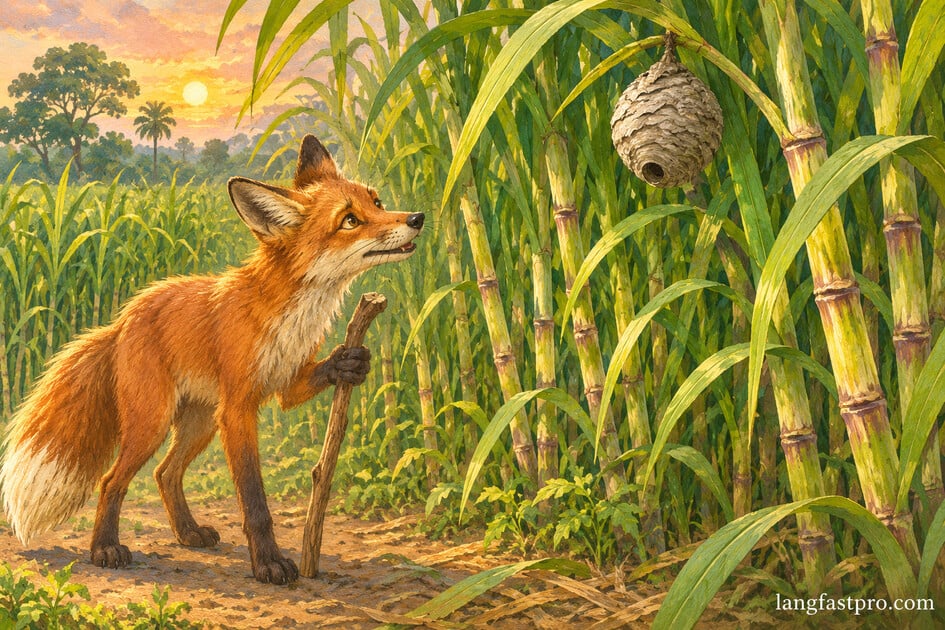
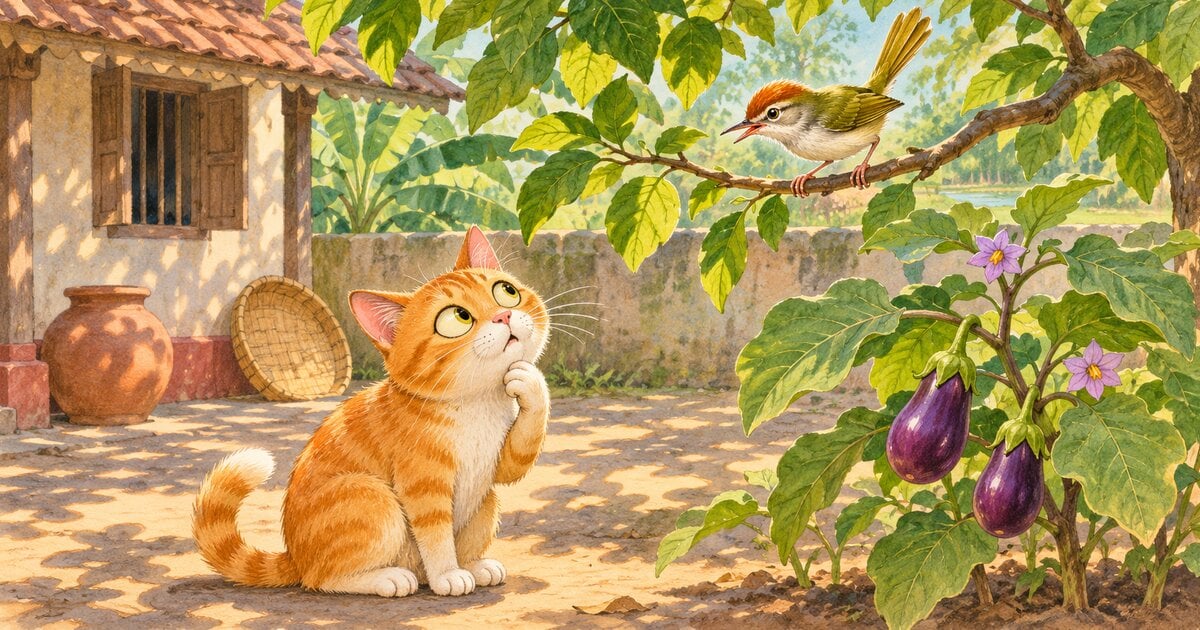
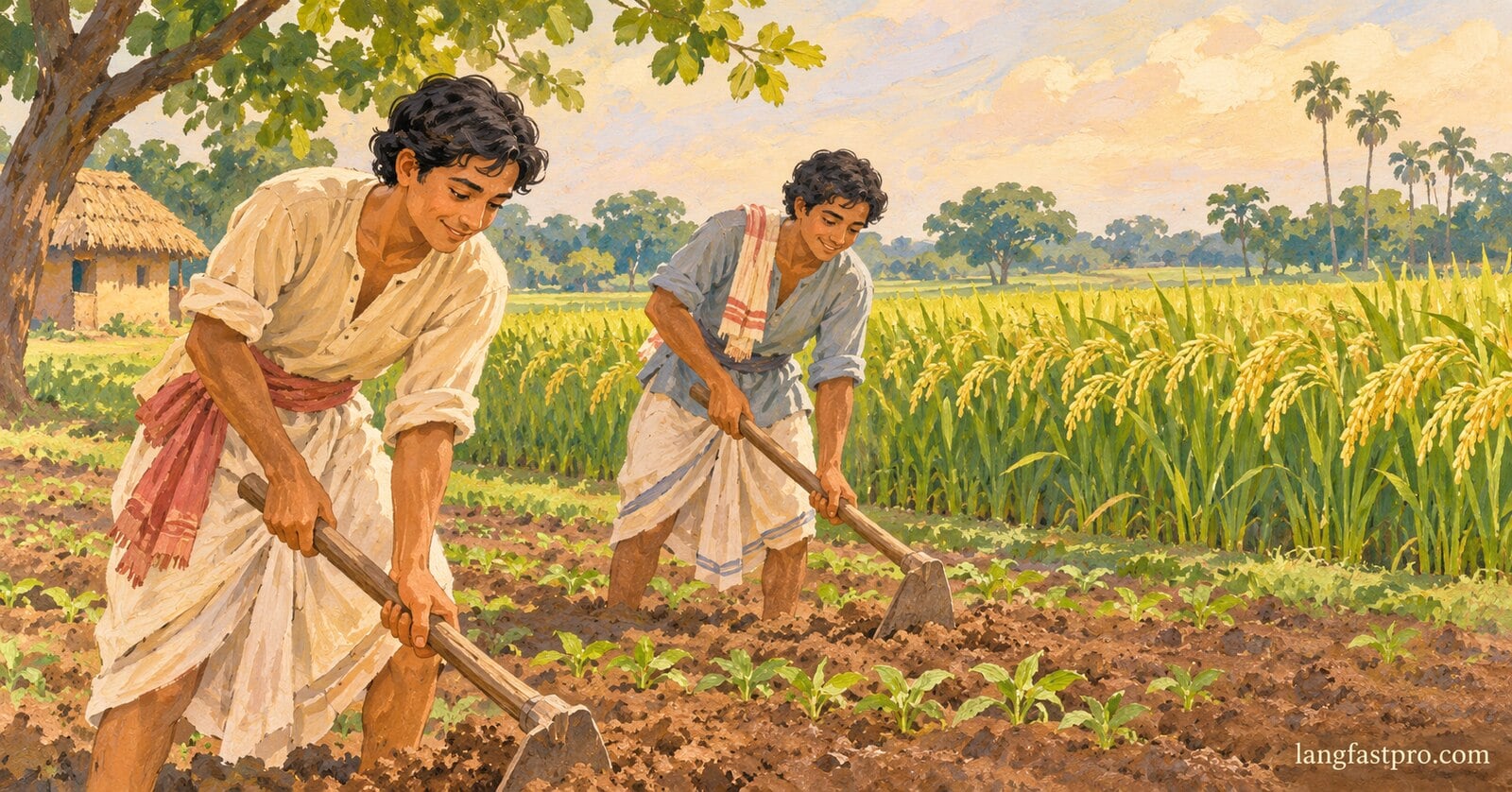
শিয়াল পণ্ডিত আখ খেতে বড় ভালোবাসে, তাই সে রোজ আখ খেতে যায়। একদিন সে আখের ক্ষেতে ঢুকে, একটি ভিমরুলের চাক দেখতে পেল। ভিমরুলের চাক সে আগে কখনো দেখেনি, সে মনে করল ওটা বুঝি আখের ফল।
শিয়াল কি না পণ্ডিত মানুষ, তাই সে আখকে বলে ‘ইক্ষু’, খেতক ‘ক্ষেত্র’, লাঠিকে বলে ‘দণ্ড’।
ভিমরুলের চাক দেখে সে বললে, ‘আহা, ইক্ষুর কি চমৎকার ফল! খেতে না জানি কতই মিষ্টি হবে?’ এই মনে করে যেই সে ভিমরুলের চাক খেতে গিয়েছে, অমনি সব ভিমরুল বেরিয়ে কি মজাটাই তাকে দেখাতে লাগল! শিয়াল তো প্রাণের ভয়ে খালি ছোটে, আর বলে, ‘ইক্ষুর ক্ষেত্রে আর যাব না।’
খানিক বাদে ভিমরুলগুলো তাকে ছেড়ে গেল। তখন সে ভাবলে, ‘ক্ষেত্রে তো রোজই যাই তাতে তো কিছু হয় না। ফল খেতে গিয়েই আমার বিপদ হল। তবে আর ক্ষেত্রে যাব না কেন? ফল না খেলেই হল।’ এই ভেবে সে বলতে লাগল, ‘যদি ইক্ষুর ক্ষেত্রে যাব, ইক্ষুর ফল আর না খাব!’ দুদিন সে খালি এই কথাই বলে।
তারপর যখন বেদনা একটু কমে এল, তখন সে ভাবলে, ঐ ফলটার ভিতর পোকা ছিল, তারাই আমাকে কামড়েছে। আগে যদি ফলটাতে নাড়া দিতুম তবে পোকাগুলি বেরিয়ে যেত। তারপর ফল খেতে কোনো কষ্ট হত না! আহা, সে ফল খেতে না জানি কতই মিষ্টি! তবে আর ফল খাব না কেন? খাবার আগে পোকা তাড়িয়ে দিলেই হবে!’ এই ভেবে সে বলতে লাগল, ‘যদি ইক্ষুর ফল খাব, আগে দণ্ড দিয়ে নাড়া দিব!’ বলতে-বলতে আখের খেতে গিয়ে সে তো লাঠি দিয়ে নাড়া দিয়েছে। অমনি আর যাবে কোথায়! ভিমরুলের দল এসে তাকে কামড়িয়ে আধমরা করে তবে ছাড়ল। সেই থেকে সে আর ইক্ষুর ফল খেত না।
Section 2: Sentence-by-Sentence Translation
| # | Bengali (বাংলা) | English translation |
|---|---|---|
| 1 | শিয়াল পণ্ডিত আখ খেতে বড় ভালোবাসে, তাই সে রোজ আখ খেতে যায়। | The learned fox loves eating sugarcane, so he goes out to eat it every day. |
| 2 | একদিন সে আখের ক্ষেতে ঢুকে, একটি ভিমরুলের চাক দেখতে পেল। | One day he went into a sugarcane field and spotted a hornets’ nest. |
| 3 | ভিমরুলের চাক সে আগে কখনো দেখেনি, সে মনে করল ওটা বুঝি আখের ফল। | He had never seen a hornets’ nest before, so he thought it must be a sugarcane fruit. |
| 4 | শিয়াল কি না পণ্ডিত মানুষ, তাই সে আখকে বলে ‘ইক্ষু’, খেতক ‘ক্ষেত্র’, লাঠিকে বলে ‘দণ্ড’। | Being a learned fellow, the fox uses fancy words for sugarcane, field, and stick: ikkhu, khetro, and dondo. |
| 5 | ভিমরুলের চাক দেখে সে বললে, ‘আহা, ইক্ষুর কি চমৎকার ফল! খেতে না জানি কতই মিষ্টি হবে?’ | When he saw the hornets’ nest, he said, ‘Oh, what a fine sugarcane fruit! I wonder how sweet it tastes!’ |
| 6 | এই মনে করে যেই সে ভিমরুলের চাক খেতে গিয়েছে, অমনি সব ভিমরুল বেরিয়ে কি মজাটাই তাকে দেখাতে লাগল! | As soon as he tried to eat the nest, all the hornets came out. What a time they gave him! |
| 7 | শিয়াল তো প্রাণের ভয়ে খালি ছোটে, আর বলে, ‘ইক্ষুর ক্ষেত্রে আর যাব না।’ | The fox ran for his life, shouting, ‘I’ll never go into the sugarcane field again.’ |
| 8 | খানিক বাদে ভিমরুলগুলো তাকে ছেড়ে গেল। | After a little while the hornets left him alone. |
| 9 | তখন সে ভাবলে, ‘ক্ষেত্রে তো রোজই যাই তাতে তো কিছু হয় না। ফল খেতে গিয়েই আমার বিপদ হল। তবে আর ক্ষেত্রে যাব না কেন? ফল না খেলেই হল।’ | Then he thought, ‘I go into the field every day and nothing happens. I only got into trouble when I tried to eat the fruit. So why shouldn’t I go back into the field? I just won’t eat the fruit.’ |
| 10 | এই ভেবে সে বলতে লাগল, ‘যদি ইক্ষুর ক্ষেত্রে যাব, ইক্ষুর ফল আর না খাব!’ | With that thought he began to say, ‘If I go into the sugarcane field, I won’t eat the sugarcane fruit again!’ |
| 11 | দুদিন সে খালি এই কথাই বলে। | For two days that was all he said. |
| 12 | তারপর যখন বেদনা একটু কমে এল, তখন সে ভাবলে, ঐ ফলটার ভিতর পোকা ছিল, তারাই আমাকে কামড়েছে। | Then when the pain eased a little, he thought, ‘There were insects inside that fruit, and they’re the ones that stung me.’ |
| 13 | আগে যদি ফলটাতে নাড়া দিতুম তবে পোকাগুলি বেরিয়ে যেত। | ‘If I had shaken the fruit first, the insects would have come out.’ |
| 14 | তারপর ফল খেতে কোনো কষ্ট হত না! | ‘Then I could have eaten it without any trouble!’ |
| 15 | আহা, সে ফল খেতে না জানি কতই মিষ্টি! | ‘Oh, I wonder how sweet that fruit tastes!’ |
| 16 | তবে আর ফল খাব না কেন? | ‘So why shouldn’t I eat it again?’ |
| 17 | খাবার আগে পোকা তাড়িয়ে দিলেই হবে!’ | ‘I just have to drive the insects away before I eat it!’ |
| 18 | এই ভেবে সে বলতে লাগল, ‘যদি ইক্ষুর ফল খাব, আগে দণ্ড দিয়ে নাড়া দিব!’ | With that thought he began to say, ‘If I eat the sugarcane fruit, I’ll shake it with my stick first!’ |
| 19 | বলতে-বলতে আখের খেতে গিয়ে সে তো লাঠি দিয়ে নাড়া দিয়েছে। | Saying this, he went into the sugarcane field and shook the nest with his stick. |
| 20 | অমনি আর যাবে কোথায়! | And then there was nowhere for him to go! |
| 21 | ভিমরুলের দল এসে তাকে কামড়িয়ে আধমরা করে তবে ছাড়ল। | The swarm of hornets came at him and didn’t stop stinging until he was half dead. |
| 22 | সেই থেকে সে আর ইক্ষুর ফল খেত না। | From then on, he never ate sugarcane fruit again. |
Section 3: Vocabulary
The fox uses ইক্ষু, ক্ষেত্র, and দণ্ড for the everyday words আখ, খেত, and লাঠি. The fancier words make him sound like a scholar.
| Bengali (বাংলা) | Transliteration | Part of speech | English meaning |
|---|---|---|---|
| শিয়াল | shiyal | Noun | fox or jackal; the animal in this story |
| পণ্ডিত | pondit | Noun or adjective | scholar; learned |
| আখ | akh | Noun | sugarcane |
| ইক্ষু | ikkhu | Noun | sugarcane; a literary word |
| খেত | khet | Noun | field |
| ক্ষেত্র | khetro | Noun | field; a more formal word here |
| ভিমরুল | bhimrul | Noun | hornet |
| চাক | chak | Noun | nest or hive; here, a hornets’ nest |
| ফল | phol | Noun | fruit |
| লাঠি | lathi | Noun | stick |
| দণ্ড | dondo | Noun | stick or staff; a more formal word here |
| মিষ্টি | mishti | Adjective | sweet |
| অমনি | omni | Adverb | immediately; just then |
| প্রাণের ভয়ে | praner bhoye | Phrase | in fear for one’s life |
| খানিক বাদে | khanik bade | Phrase | a little while later |
| বিপদ | bipod | Noun | trouble; danger |
| বেদনা | bedona | Noun | pain |
| পোকা | poka | Noun | insect; bug |
| নাড়া দেওয়া | nara dewa | Verb phrase | to shake or jostle |
| তাড়িয়ে দেওয়া | tariye dewa | Verb phrase | to drive away |
| আধমরা | adhmora | Adjective | half dead |
Source: আখের ফল, by Upendrakishore Ray Chowdhury, from টুনটুনির বই, printed pp. 109–110. The original Bengali story is in the public domain. English translation and reading aid by LangFastPro.