গল্প পড়ে বাংলা শিখি।
Section 1: Bengali Story
টুনটুনি আর বিড়ালের কথা — The Tailorbird and the Cat
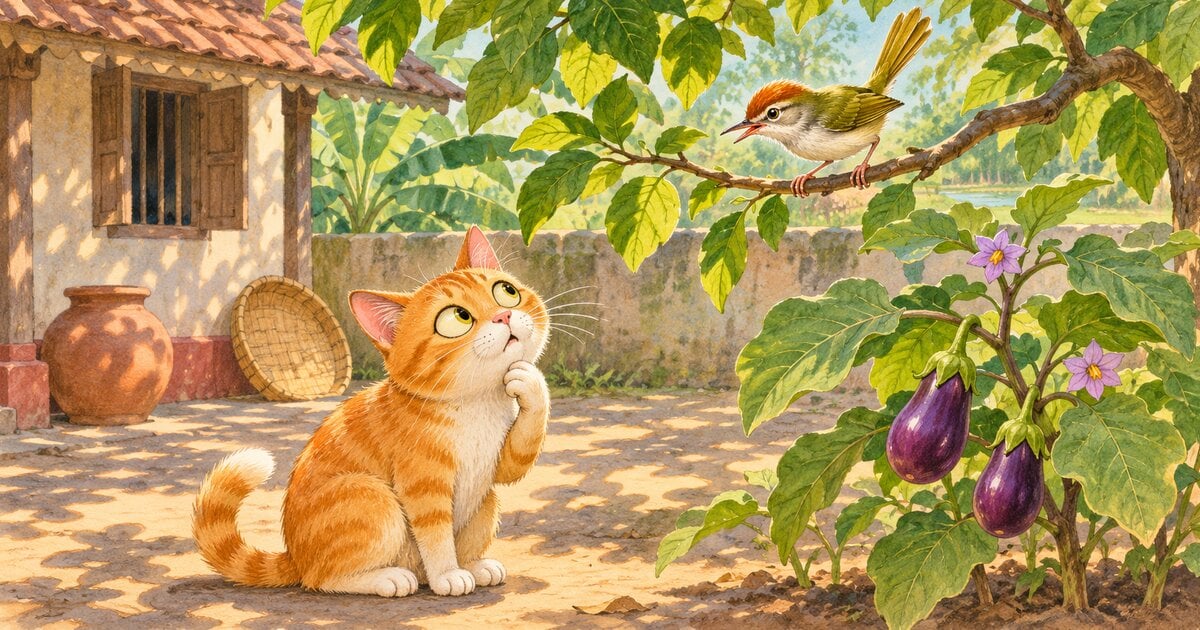
গৃহস্থের ঘরের পিছনে বেগুন গাছ আছে। সেই বেগুন গাছের পাতা ঠোঁট দিয়ে সেলাই করে টুনটুনি পাখিটি তার বাসা বেঁধেছে।
বাসার ভিতরে তিনটি ছোট্ট-ছোট্ট ছানা হয়েছে। খুব ছোট্ট ছানা, তারা উড়তে পারে না, চোখও মেলতে পারে না। খালি হাঁ করে, আর চীঁ-চীঁ করে।
গৃহস্থের বিড়ালটা ভারী দুষ্টু। সে খালি ভাবে ‘টুনটুনির ছানা খাব।’ একদিন সে বেগুন গাছের তলায় এসে বললে, ‘কি করছিস লা টুনটুনি?’
টুনটুনি তার মাথা হেঁট করে বেগুন গাছের ডালে ঠেকিয়ে বললে, ‘প্রণাম হই, মহারানী!’
তাতে বিড়ালনী ভারী খুশী হয়ে চলে গেল।
এমনি সে রোজ আসে, রোজ টুনটুনি তাকে প্রণাম করে আর মহারানী বলে, আর সে খুশী হয়ে চলে যায়।
এখন টুনটুনির ছানাগুলি বড় হয়েছে, তাদের সুন্দর পাখা হয়েছে। তারা আর চোখ বুজে থাকে না। তা দেখে টুনটুনি তাদের বললে, ‘বাছা, তোরা উড়তে পারবি?’
ছানারা বললে, ‘হ্যাঁ মা, পারব।’
টুনটুনি বললে, ‘তবে দেখ তো দেখি, ঐ তাল গাছটার ডালে গিয়ে বসতে পারিস কিনা।’
ছানারা তখনি উড়ে গিয়ে তাল গাছের ডালে বসল। তা দেখে টুনটুনি হেসে বললে, ‘এখন দুষ্টু বিড়াল আসুক দেখি!’
খানিক বাদেই বিড়াল এসে বললে, ‘কি করছিস লা টুনটুনি?’
তখন টুনটুনি পা উঠিয়ে তাকে লাথি দেখিয়ে বললে, ‘দূর হ, লক্ষ্মীছাড়ী বিড়ালনী!’ বলেই সে ফুড়ুক করে উড়ে পালাল।
দুষ্টু বিড়াল দাঁত খিঁচিয়ে লাফিয়ে গাছে উঠে, টুনটুনিকেও ধরতে পারল না, ছানাও খেতে পেল না। খালি বেগুন কাঁটার খোঁচা খেয়ে নাকাল হয়ে ঘরে ফিরল।
Section 2: Sentence-by-Sentence Translation
| # | Bengali (বাংলা) | English Translation |
|---|---|---|
| 1 | গৃহস্থের ঘরের পিছনে বেগুন গাছ আছে। | There was an eggplant plant behind the house. |
| 2 | সেই বেগুন গাছের পাতা ঠোঁট দিয়ে সেলাই করে টুনটুনি পাখিটি তার বাসা বেঁধেছে। | The tailorbird had stitched its leaves together with her beak to make a nest. |
| 3 | বাসার ভিতরে তিনটি ছোট্ট-ছোট্ট ছানা হয়েছে। | There were three tiny chicks in the nest. |
| 4 | খুব ছোট্ট ছানা, তারা উড়তে পারে না, চোখও মেলতে পারে না। | They were so small that they could not fly or even open their eyes. |
| 5 | খালি হাঁ করে, আর চীঁ-চীঁ করে। | They just gaped and chirped, ‘Cheep, cheep!’ |
| 6 | গৃহস্থের বিড়ালটা ভারী দুষ্টু। | The household cat was quite wicked. |
| 7 | সে খালি ভাবে ‘টুনটুনির ছানা খাব।’ | She kept thinking, ‘I’ll eat the tailorbird’s chicks.’ |
| 8 | একদিন সে বেগুন গাছের তলায় এসে বললে, ‘কি করছিস লা টুনটুনি?’ | One day the cat came up to the eggplant plant and asked from beneath it, ‘What are you doing, little tailorbird?’ |
| 9 | টুনটুনি তার মাথা হেঁট করে বেগুন গাছের ডালে ঠেকিয়ে বললে, ‘প্রণাম হই, মহারানী!’ | The tailorbird bowed, touched her head to a branch of the eggplant plant, and said, ‘My respects, Your Majesty!’ |
| 10 | তাতে বিড়ালনী ভারী খুশী হয়ে চলে গেল। | The cat was delighted and went away. |
| 11 | এমনি সে রোজ আসে, রোজ টুনটুনি তাকে প্রণাম করে আর মহারানী বলে, আর সে খুশী হয়ে চলে যায়। | So the cat came every day, and every day the tailorbird bowed and called her “Your Majesty,” and the cat went away happy. |
| 12 | এখন টুনটুনির ছানাগুলি বড় হয়েছে, তাদের সুন্দর পাখা হয়েছে। | By now the tailorbird’s chicks had grown and had lovely wings. |
| 13 | তারা আর চোখ বুজে থাকে না। | They no longer kept their eyes shut. |
| 14 | তা দেখে টুনটুনি তাদের বললে, ‘বাছা, তোরা উড়তে পারবি?’ | Seeing that, the tailorbird asked, ‘My little ones, can you fly?’ |
| 15 | ছানারা বললে, ‘হ্যাঁ মা, পারব।’ | The chicks said, ‘Yes, Mum, we can.’ |
| 16 | টুনটুনি বললে, ‘তবে দেখ তো দেখি, ঐ তাল গাছটার ডালে গিয়ে বসতে পারিস কিনা।’ | The tailorbird said, ‘Let’s see if you can fly over and perch on a branch of that palm tree.’ |
| 17 | ছানারা তখনি উড়ে গিয়ে তাল গাছের ডালে বসল। | The chicks flew straight over and perched on a branch of the palm tree. |
| 18 | তা দেখে টুনটুনি হেসে বললে, ‘এখন দুষ্টু বিড়াল আসুক দেখি!’ | The tailorbird smiled and said, ‘Now let’s see the wicked cat come!’ |
| 19 | খানিক বাদেই বিড়াল এসে বললে, ‘কি করছিস লা টুনটুনি?’ | Before long the cat came and asked, ‘What are you doing, little tailorbird?’ |
| 20 | তখন টুনটুনি পা উঠিয়ে তাকে লাথি দেখিয়ে বললে, ‘দূর হ, লক্ষ্মীছাড়ী বিড়ালনী!’ | The tailorbird lifted a foot, threatened to kick her, and said, ‘Go away, you wretched cat!’ |
| 21 | বলেই সে ফুড়ুক করে উড়ে পালাল। | With that, she fluttered away. |
| 22 | দুষ্টু বিড়াল দাঁত খিঁচিয়ে লাফিয়ে গাছে উঠে, টুনটুনিকেও ধরতে পারল না, ছানাও খেতে পেল না। | The wicked cat bared her teeth and leapt up onto the plant, but she couldn’t catch the tailorbird or eat the chicks. |
| 23 | খালি বেগুন কাঁটার খোঁচা খেয়ে নাকাল হয়ে ঘরে ফিরল। | All she got was a prick from an eggplant thorn, and she went home miserable. |
Section 3: Vocabulary
| Bengali (বাংলা) | Transliteration | Part of Speech | English Meaning |
|---|---|---|---|
| গৃহস্থ | grihostho | noun | householder |
| পিছনে | pichhone | postposition | behind |
| বেগুন | begun | noun | eggplant; aubergine |
| ঠোঁট | thont | noun | beak; lip |
| সেলাই | shelai | noun | sewing; stitching |
| বাসা | basha | noun | nest; home |
| ছানা | chhana | noun | chick; the young of an animal |
| উড়তে | urte | verb form | to fly |
| মেলতে | melte | verb form | to open (the eyes here); spread |
| হাঁ করে | ha kore | verb phrase | gapes; opens the mouth wide |
| দুষ্টু | dushtu | adjective | naughty; wicked |
| তলায় | tolay | postposition | under; beneath |
| ডালে | dale | noun form | on or to a branch, depending on the verb |
| প্রণাম | pronam | noun | a respectful greeting or bow |
| মহারানী | maharani | noun/title | queen; “Your Majesty” here |
| রোজ | roj | adverb | every day |
| পাখা | pakha | noun | wing; also fan in other contexts |
| বুজে থাকে | buje thake | verb phrase | keeps shut; here, keeps the eyes closed |
| তাল গাছ | tal gachh | noun phrase | palmyra palm tree |
| পালাল | palalo | verb | fled; ran or flew away |
| দাঁত খিঁচিয়ে | dant khinchiye | verb phrase | baring or gritting the teeth |
| কাঁটা | kanta | noun | thorn |
| নাকাল | nakal | adjective | in a miserable state |
Source: টুনটুনি আর বিড়ালের কথা, by Upendrakishore Ray Chowdhury, from টুনটুনির বই. Bengali text follows the scanned Deb Sahitya Kutir edition (August 1964, printed pp. 2–4), without the illustration captions. Original story in the public domain in India; Roman reading aid and English translation by LangFastPro.