கதைகள் மூலம் தமிழ் கற்போம்.
Section 1: Tamil Story
கோகோ எங்கே ? — Where Is Gogo?
டோட்டோவுக்கு விலங்குகளை மிகவும் பிடிக்கும். அவன் ஒரு மிருகக்காட்சி சாலையில் (ஜூ) வேலை செய்தான். ஒரு நாள் கோகோ என்ற மனிதக்குரங்கு இருக்கும் கூண்டு காலியாக இருப்பதைப் பார்த்தான். அதிர்ச்சியான டோட்டோ, கோகோவைக் கண்டுபிடிக்கப் போனான்.
கோகோ காட்டிற்குள்ளே ஓடியிருக்கும் என்று டோட்டோ நினைத்தான். அவன் எல்லா புதர்களிலும் மரங்களுக்குப் பின்னும் தேடினான். அங்கிருந்த மிருகங்கள் எல்லாம் டோட்டோவைப் பார்த்துக்கொண்டு இருந்தன. ஆனால் டோட்டோவால் கோகோவை எங்கும் கண்டுபிடிக்க முடியவில்லை.
டோட்டோ தனது பைனாக்குலர் கண்ணாடியை வெளியே எடுத்தான். அங்கிருந்த ஆற்றைச் சுற்றி பைனாக்குலர் மூலம் பார்த்தான். ஒருவேளை, கோகோ, ஆற்றின் மறுகரைக்குப் போயிருக்குமோ ?
ஆனால் கோகோவைக் கண்டுபிடிக்க முடியவில்லை. டோட்டோ, மூச்சை இழுத்துக்கொண்டு ஆற்றில் குதித்தான். ஒரு வேளை, கோகோவும் மூச்சை அடக்கிக்கொண்டு, தண்ணிருக்கு அடியில் ஒளிந்திருந்தால் ??
அங்கிருந்த மோட்டி என்ற நாய்க்கு டோட்டோவைப் பார்க்கப் பாவமாய் இருந்தது. அது குரைத்துக்கொண்டே அருகில் இருந்த கடைப் பக்கம் பார்த்தது.
ஆ !! டோட்டோவுக்குக் கடைசியாக ஒரு வழி கிடைத்தது !
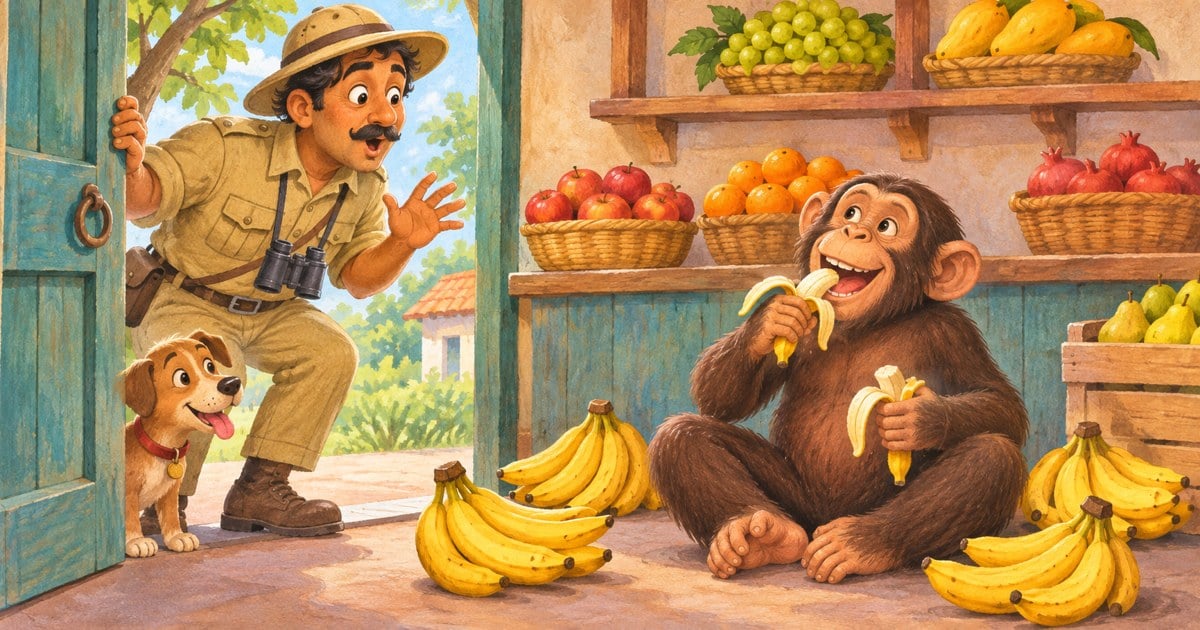
டோட்டோ தடாலென்று கதவைத் திறந்தான். அங்கே, கோகோ, மகிழ்ச்சியாக அமர்ந்து வாழைப்பழங்களைத் தின்று கொண்டிருந்தது. அங்கு மொத்த இடத்தையும் கோகோ களேபரம் செய்திருந்தது !!
அதிர்ச்சியில் டோட்டோ எதுவும் பேசமுடியாமல் கோகோவை வெறித்துப் பார்த்துக்கொண்டிருந்தான் !!
Section 2: Sentence-by-Sentence Translation
| # | Tamil (தமிழ்) | English Translation |
|---|---|---|
| 1 | டோட்டோவுக்கு விலங்குகளை மிகவும் பிடிக்கும். | Toto loved animals. |
| 2 | அவன் ஒரு மிருகக்காட்சி சாலையில் (ஜூ) வேலை செய்தான். | He worked at a zoo. |
| 3 | ஒரு நாள் கோகோ என்ற மனிதக்குரங்கு இருக்கும் கூண்டு காலியாக இருப்பதைப் பார்த்தான். | One day, he saw that the cage where Gogo the ape lived was empty. |
| 4 | அதிர்ச்சியான டோட்டோ, கோகோவைக் கண்டுபிடிக்கப் போனான். | Shocked, Toto went to find Gogo. |
| 5 | கோகோ காட்டிற்குள்ளே ஓடியிருக்கும் என்று டோட்டோ நினைத்தான். | Toto thought that Gogo must have run into the forest. |
| 6 | அவன் எல்லா புதர்களிலும் மரங்களுக்குப் பின்னும் தேடினான். | He searched in all the bushes and behind the trees. |
| 7 | அங்கிருந்த மிருகங்கள் எல்லாம் டோட்டோவைப் பார்த்துக்கொண்டு இருந்தன. | All the animals there were watching Toto. |
| 8 | ஆனால் டோட்டோவால் கோகோவை எங்கும் கண்டுபிடிக்க முடியவில்லை. | But Toto could not find Gogo anywhere. |
| 9 | டோட்டோ தனது பைனாக்குலர் கண்ணாடியை வெளியே எடுத்தான். | Toto took out his binoculars. |
| 10 | அங்கிருந்த ஆற்றைச் சுற்றி பைனாக்குலர் மூலம் பார்த்தான். | He looked around the river through them. |
| 11 | ஒருவேளை, கோகோ, ஆற்றின் மறுகரைக்குப் போயிருக்குமோ ? | Perhaps Gogo had gone to the other bank of the river? |
| 12 | ஆனால் கோகோவைக் கண்டுபிடிக்க முடியவில்லை. | But he could not find Gogo. |
| 13 | டோட்டோ, மூச்சை இழுத்துக்கொண்டு ஆற்றில் குதித்தான். | Toto took a breath and jumped into the river. |
| 14 | ஒரு வேளை, கோகோவும் மூச்சை அடக்கிக்கொண்டு, தண்ணிருக்கு அடியில் ஒளிந்திருந்தால் ?? | What if Gogo was also holding his breath and hiding underwater? |
| 15 | அங்கிருந்த மோட்டி என்ற நாய்க்கு டோட்டோவைப் பார்க்கப் பாவமாய் இருந்தது. | A dog named Moti felt sorry for Toto. |
| 16 | அது குரைத்துக்கொண்டே அருகில் இருந்த கடைப் பக்கம் பார்த்தது. | Barking, it looked towards the nearby shop. |
| 17 | ஆ !! டோட்டோவுக்குக் கடைசியாக ஒரு வழி கிடைத்தது ! | Ah! At last, Toto had found a clue! |
| 18 | டோட்டோ தடாலென்று கதவைத் திறந்தான். | Toto flung the door open. |
| 19 | அங்கே, கோகோ, மகிழ்ச்சியாக அமர்ந்து வாழைப்பழங்களைத் தின்று கொண்டிருந்தது. | There was Gogo, sitting happily and eating bananas. |
| 20 | அங்கு மொத்த இடத்தையும் கோகோ களேபரம் செய்திருந்தது !! | Gogo had made a mess of the whole place! |
| 21 | அதிர்ச்சியில் டோட்டோ எதுவும் பேசமுடியாமல் கோகோவை வெறித்துப் பார்த்துக்கொண்டிருந்தான் !! | Toto was so shocked that he could not say anything and just stared at Gogo! |
Section 3: Vocabulary
சில சொற்கள் அடிப்படை வடிவத்தில் கொடுக்கப்பட்டுள்ளன. / Some entries use base forms rather than the inflected forms in the story.
| Tamil | Transliteration | Part of Speech | English Meaning |
|---|---|---|---|
| விலங்கு | vilangu | Noun | animal |
| மிருகக்காட்சி சாலை | mirugakkaatchi saalai | Noun phrase | zoo |
| மனிதக்குரங்கு | manidhakkurangu | Noun | ape |
| கூண்டு | koondu | Noun | cage |
| காடு | kaadu | Noun | forest |
| புதர் | pudhar | Noun | bush |
| மரம் | maram | Noun | tree |
| கண்டுபிடிக்க | kandupidikka | Verb (infinitive) | to find |
| ஆறு | aaru | Noun | river |
| மறுகரை | marukarai | Noun | opposite bank |
| மூச்சு | moochchu | Noun | breath |
| நாய் | naay | Noun | dog |
| கடை | kadai | Noun | shop |
| கதவு | kadhavu | Noun | door |
| மகிழ்ச்சியாக | magizhchchiyaaga | Adverb | happily |
| வாழைப்பழம் | vaazhaippazham | Noun | banana |
| அதிர்ச்சி | adhirchchi | Noun | shock; surprise |
| எங்கே | engay | Question word | where |
Reading help: aa, ee and oo mark long vowels; ay represents ஏ and oh represents ஓ. The th in these spellings is a dental t, not the English sound in “thin”. The zh in vaazhaippazham represents ழ. Simple Roman spellings do not distinguish every Tamil n, l or r sound.
Source: கோகோ எங்கே ?, Tamil translation by Vidhu parna (© Vidhu parna, 2015), from Where Is Gogo? / कहाँ गया गोगो? by Mala Kumar and Manisha Chaudhry (© Pratham Books, 2015), on StoryWeaver, CC BY 4.0. Tamil text retained with new layout; new English translation, reading help and learning notes by LangFastPro.