ಕಥೆಗಳ ಮೂಲಕ ಕನ್ನಡ ಕಲಿಯೋಣ.
Section 1: Kannada Story
ಕಾಳಿನ ಮೇಲೆ ಹೆಸರು — A Name on the Grain
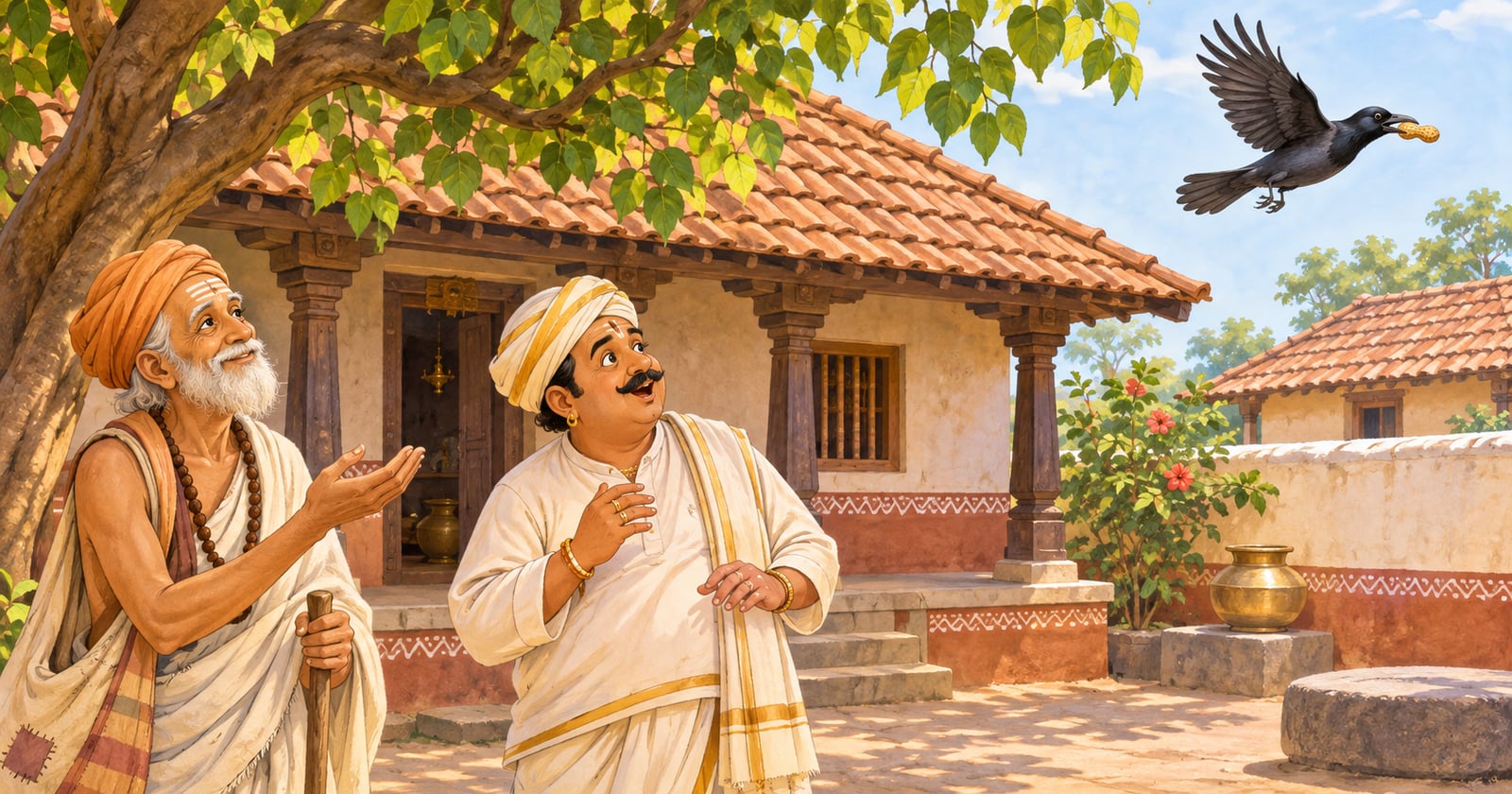
ಸಾಹುಕಾರನು ನೆಲಗಡಲೆ ತಿನ್ನುತ್ತ ತನ್ನ ಮನೆಯ ತಲೆವಾಗಿಲ ಮುಂದೆ ಕುಳಿತಿದ್ದನು. ಅತ್ತಕಡೆಯಿಂದ ಒಬ್ಬ ಸಾಧು ಬಂದು ಭಿಕ್ಷೆ ಬೇಡಿದನು. “ಮುಂದಿನ ಮನೆಗೆ ಹೋಗು” ಎಂದು ಸಾಹುಕಾರನು ನುಡಿದನು.
“ತಿನ್ನಲು ನಾಲ್ಕು ಕಾಯಿಗಳನ್ನಾದರೂ ಕೊಡಿರಿ” ಎಂದನು ಸಾಧು.
“ಅವು ಪುಕ್ಕಟೆ ಬಂದಿಲ್ಲ. ನಮಗೆ ಸಾಕಾಗಿ ಉಳಿದರೆ, ನಿನ್ನನ್ನು ಕರೆದು ಕೊಡುವೆನು. ಆಯಿತೇ ?” ಎಂದು ಸಾಹುಕಾರನು ಹೀಯಾಳಿಸಿದನು.
“ಎಲ್ಲವನ್ನೂ ನಾನೇ ತಿನ್ನುವೆನೆಂದರೆ ಸಾಧ್ಯವೇ ? ಪ್ರತಿಯೊಂದು ಕಾಳಿನ ಮೇಲೆ ಅದು ಹುಟ್ಟುವಾಗಲೇ ಅದನ್ನು ಯಾರು ತಿನ್ನಬೇಕಾಗಿದೆಯೋ ಅವರ ಹೆಸರು ಬರೆದಿರುತ್ತದೆ.”
ಸಾಹುಕಾರನ ತಲೆ ತಿರುಗಿತು - ಸಾಧುವಿನ ಬ್ರಹ್ಮಜ್ಞಾನವನ್ನು ಕೇಳಿ. ಕೇಳಿದನು - “ನೀನೊಬ್ಬ ಒಂಟೆಯ ಮೇಲಿನ ಜಾಣನೇ ಬಂದಿರುವೆಯಲ್ಲ ! ಇಲ್ಲಿ ನೋಡು ನನ್ನ ಕೈ ಬೆರಳಿನಲ್ಲಿ ಹಿಡಿದ ಕಾಳು ! ಇದರ ಮೇಲೆ ಯಾರ ಹೆಸರು ಬರೆದಿದೆ ಹೇಳು ನೋಡುವಾ.”
“ಅದರ ಮೇಲೆ ಒಂದು ಕಾಗೆಯ ಹೆಸರಿದೆ. ಆ ಕಾಳು ಅದರ ಆಹಾರ” ಎಂದನು ಸಾಧು.
ಸಾಹುಕಾರನು ಈರ್ಷೆಯಿಂದ - “ಇದೋ ನಾನಿದನ್ನು ತಿಂದುಬಿಡುವೆ. ಎಲ್ಲಿದೆ ನಿನ್ನ ಆ ಕಾಗೆ ?” ಎನ್ನುತ್ತ ಆ ಕಾಳನ್ನು ಬಾಯಲ್ಲಿ ಒಗೆದುಕೊಳ್ಳಹೋದನು. ಅದು ತಪ್ಪಿ ಅವನ ಮೂಗಿನ ಹೊರಳೆಯಲ್ಲಿ ಸೇರಿಬಿಟ್ಟಿತು.
ನೆಲಗಡಲೆಯಕಾಳು ಮೂಗಿನ ಹೊರಳೆಯಲ್ಲಿ ಸೇರಿಬಿಟ್ಟಿದ್ದರಿಂದ ಸಾಹುಕಾರನ ಉಸಿರಾಟಕ್ಕೆ ತಡೆಯಾಯಿತು. ಕೂಗಾಡತೊಡಗಿದನು. ಆ ಗಲವಿಲಿಗೆ ನೆರೆಹೊರೆಯವರು ನೆರೆದರು. ಆತನನ್ನು ಹೊತ್ತುಕೊಂಡು ಕ್ಷೌರಿಕನ ಮನೆಗೆ ಹೋದರು.
ತನ್ನಲ್ಲಿರುವ ಚಿಮಟಿಗೆಯಿಂದ ಹಡಪಿಗನು, ಸಾಹುಕಾರನ ಮೂಗಿನೊಳಗಿನ ಆ ಕಾಳನ್ನು ತೆಗೆದು ಬೀಸಿ ಅಂಗಳಕ್ಕೆ ಒಗೆದನು. ಕೂಡಲೇ ಬದಿಯ ಗಿಡದಲ್ಲಿ ಕುಳಿತ ಕಾಗೆ ಹಾರಿಬಂದು ಆ ಕಾಳನ್ನು ಕಟ್ಟಿಕೊಂಡು ಹೋಯಿತು.
“ಕಾಗೆಗೆಂದು ಹುಟ್ಟಿದ ಕಾಳು ಕಾಗೆಗೆ ಸಂದಿತು” ಎಂದನು ಆ ಸಾಧು. ಆ ಬಳಿಕ ಸಾಧುವನ್ನು ಕರೆದು ಸಾಹುಕಾರನು ಸತ್ಕರಿಸಿ ಕಳಿಸಿದನು.
Section 2: Sentence-by-Sentence Translation
| # | Kannada (ಕನ್ನಡ) | English Translation |
|---|---|---|
| 1 | ಸಾಹುಕಾರನು ನೆಲಗಡಲೆ ತಿನ್ನುತ್ತ ತನ್ನ ಮನೆಯ ತಲೆವಾಗಿಲ ಮುಂದೆ ಕುಳಿತಿದ್ದನು. | A wealthy man sat at the front door of his house, eating peanuts. |
| 2 | ಅತ್ತಕಡೆಯಿಂದ ಒಬ್ಬ ಸಾಧು ಬಂದು ಭಿಕ್ಷೆ ಬೇಡಿದನು. | A holy man came from that direction and asked for alms. |
| 3 | “ಮುಂದಿನ ಮನೆಗೆ ಹೋಗು” ಎಂದು ಸಾಹುಕಾರನು ನುಡಿದನು. | “Go to the next house,” said the wealthy man. |
| 4 | “ತಿನ್ನಲು ನಾಲ್ಕು ಕಾಯಿಗಳನ್ನಾದರೂ ಕೊಡಿರಿ” ಎಂದನು ಸಾಧು. | “At least give me four nuts to eat,” said the holy man. |
| 5 | “ಅವು ಪುಕ್ಕಟೆ ಬಂದಿಲ್ಲ. | “They did not come free. |
| 6 | ನಮಗೆ ಸಾಕಾಗಿ ಉಳಿದರೆ, ನಿನ್ನನ್ನು ಕರೆದು ಕೊಡುವೆನು. | If any are left after we have had enough, I will call you and give you some. |
| 7 | ಆಯಿತೇ ?” ಎಂದು ಸಾಹುಕಾರನು ಹೀಯಾಳಿಸಿದನು. | All right?” the wealthy man said mockingly. |
| 8 | “ಎಲ್ಲವನ್ನೂ ನಾನೇ ತಿನ್ನುವೆನೆಂದರೆ ಸಾಧ್ಯವೇ ? | “Is it possible to say, ‘I will eat everything myself’? |
| 9 | ಪ್ರತಿಯೊಂದು ಕಾಳಿನ ಮೇಲೆ ಅದು ಹುಟ್ಟುವಾಗಲೇ ಅದನ್ನು ಯಾರು ತಿನ್ನಬೇಕಾಗಿದೆಯೋ ಅವರ ಹೆಸರು ಬರೆದಿರುತ್ತದೆ.” | From the moment each grain comes into being, the name of the person who is to eat it is written on it.” |
| 10 | ಸಾಹುಕಾರನ ತಲೆ ತಿರುಗಿತು - ಸಾಧುವಿನ ಬ್ರಹ್ಮಜ್ಞಾನವನ್ನು ಕೇಳಿ. | The wealthy man’s head spun on hearing the holy man’s spiritual wisdom. |
| 11 | ಕೇಳಿದನು - “ನೀನೊಬ್ಬ ಒಂಟೆಯ ಮೇಲಿನ ಜಾಣನೇ ಬಂದಿರುವೆಯಲ್ಲ ! | He asked, “So here you come, a know-it-all on a camel! |
| 12 | ಇಲ್ಲಿ ನೋಡು ನನ್ನ ಕೈ ಬೆರಳಿನಲ್ಲಿ ಹಿಡಿದ ಕಾಳು ! | Look here at the nut I am holding between my fingers! |
| 13 | ಇದರ ಮೇಲೆ ಯಾರ ಹೆಸರು ಬರೆದಿದೆ ಹೇಳು ನೋಡುವಾ.” | Let us see you tell me whose name is written on it.” |
| 14 | “ಅದರ ಮೇಲೆ ಒಂದು ಕಾಗೆಯ ಹೆಸರಿದೆ. | “A crow’s name is on it. |
| 15 | ಆ ಕಾಳು ಅದರ ಆಹಾರ” ಎಂದನು ಸಾಧು. | That nut is its food,” said the holy man. |
| 16 | ಸಾಹುಕಾರನು ಈರ್ಷೆಯಿಂದ - “ಇದೋ ನಾನಿದನ್ನು ತಿಂದುಬಿಡುವೆ. | The wealthy man said spitefully, “Look, I will eat it myself. |
| 17 | ಎಲ್ಲಿದೆ ನಿನ್ನ ಆ ಕಾಗೆ ?” ಎನ್ನುತ್ತ ಆ ಕಾಳನ್ನು ಬಾಯಲ್ಲಿ ಒಗೆದುಕೊಳ್ಳಹೋದನು. | Where is that crow of yours?” Saying this, he tried to toss the nut into his mouth. |
| 18 | ಅದು ತಪ್ಪಿ ಅವನ ಮೂಗಿನ ಹೊರಳೆಯಲ್ಲಿ ಸೇರಿಬಿಟ್ಟಿತು. | It missed and went into his nostril. |
| 19 | ನೆಲಗಡಲೆಯಕಾಳು ಮೂಗಿನ ಹೊರಳೆಯಲ್ಲಿ ಸೇರಿಬಿಟ್ಟಿದ್ದರಿಂದ ಸಾಹುಕಾರನ ಉಸಿರಾಟಕ್ಕೆ ತಡೆಯಾಯಿತು. | With the peanut lodged in his nostril, the wealthy man had trouble breathing. |
| 20 | ಕೂಗಾಡತೊಡಗಿದನು. | He began to shout. |
| 21 | ಆ ಗಲವಿಲಿಗೆ ನೆರೆಹೊರೆಯವರು ನೆರೆದರು. | The neighbours gathered at the commotion. |
| 22 | ಆತನನ್ನು ಹೊತ್ತುಕೊಂಡು ಕ್ಷೌರಿಕನ ಮನೆಗೆ ಹೋದರು. | They carried him to the barber’s house. |
| 23 | ತನ್ನಲ್ಲಿರುವ ಚಿಮಟಿಗೆಯಿಂದ ಹಡಪಿಗನು, ಸಾಹುಕಾರನ ಮೂಗಿನೊಳಗಿನ ಆ ಕಾಳನ್ನು ತೆಗೆದು ಬೀಸಿ ಅಂಗಳಕ್ಕೆ ಒಗೆದನು. | Using his tweezers, the barber removed the nut from the wealthy man’s nose and flung it into the courtyard. |
| 24 | ಕೂಡಲೇ ಬದಿಯ ಗಿಡದಲ್ಲಿ ಕುಳಿತ ಕಾಗೆ ಹಾರಿಬಂದು ಆ ಕಾಳನ್ನು ಕಟ್ಟಿಕೊಂಡು ಹೋಯಿತು. | At once, a crow sitting in a nearby tree flew over, seized the nut and carried it away. |
| 25 | “ಕಾಗೆಗೆಂದು ಹುಟ್ಟಿದ ಕಾಳು ಕಾಗೆಗೆ ಸಂದಿತು” ಎಂದನು ಆ ಸಾಧು. | “The nut that came into being for the crow has reached the crow,” said the holy man. |
| 26 | ಆ ಬಳಿಕ ಸಾಧುವನ್ನು ಕರೆದು ಸಾಹುಕಾರನು ಸತ್ಕರಿಸಿ ಕಳಿಸಿದನು. | After that, the wealthy man invited the holy man in, treated him hospitably and sent him on his way. |
Section 3: Vocabulary
| Kannada (ಕನ್ನಡ) | Transliteration | Part of Speech | English Meaning |
|---|---|---|---|
| ನೆಲಗಡಲೆ | nelagadale | Noun | peanuts; groundnuts |
| ಸಾಹುಕಾರನು | saahukaaranu | Noun | the wealthy man |
| ಸಾಧು | saadhu | Noun | holy man; mendicant |
| ಭಿಕ್ಷೆ | bhikshe | Noun | alms |
| ಪುಕ್ಕಟೆ | pukkate | Adverb | free of charge |
| ಕಾಳು | kaalu | Noun | grain; kernel; nut |
| ಹೆಸರು | hesaru | Noun | name |
| ಕಾಗೆ | kaage | Noun | crow |
| ಆಹಾರ | aahaara | Noun | food |
| ಈರ್ಷೆಯಿಂದ | eersheyinda | Adverbial noun form | with envy or spite |
| ಉಸಿರಾಟಕ್ಕೆ | usiraatakke | Noun (dative) | to breathing |
| ನೆರೆಹೊರೆಯವರು | nerehoreyavaru | Noun | neighbours |
| ಕ್ಷೌರಿಕನ | kshaurikana | Noun (genitive) | the barber’s |
| ಹಡಪಿಗನು | hadapiganu | Noun | the barber (regional word) |
| ಚಿಮಟಿಗೆಯಿಂದ | chimatigeyinda | Noun (instrumental) | with tweezers |
| ಅಂಗಳಕ್ಕೆ | angalakke | Noun (dative) | into the courtyard |
| ಹಾರಿಬಂದು | haaribandu | Verb form | having flown over |
| ಸತ್ಕರಿಸಿ | satkarisi | Verb form | having treated hospitably |
ಕೆಲವು ಪದಗಳನ್ನು ಕಥೆಯಲ್ಲಿ ಬಂದ ರೂಪದಲ್ಲೇ ನೀಡಲಾಗಿದೆ. Some entries retain their endings from the story: -ಕ್ಕೆ often marks “to,” and -ಯಿಂದ marks “from” or “with.”
The simple Roman spellings use aa, ee and oo for long vowels. The l in kaalu (ಕಾಳು, “grain”) is made with the tongue curled back, unlike the l in nelagadale (ನೆಲಗಡಲೆ). In “ಒಂಟೆಯ ಮೇಲಿನ ಜಾಣ,” the speaker is mocking a self-important know-it-all; no camel appears in this scene.
Source: ಕಾಳಿನ ಮೇಲೆ ಹೆಸರು, from ಉತ್ತರ ಕರ್ನಾಟಕದ ಜನಪದ ಕಥೆಗಳು, compiled by Simpi Linganna, pp. 155–156 (2011 edition, copyright Government of Karnataka, Department of Kannada and Culture), via Wikimedia Commons, CC BY-SA 3.0. English translation, Roman reading aid and learning notes by LangFastPro, shared under the same licence. Layout adapted; Kannada story wording preserved.