ಕಥೆಗಳ ಮೂಲಕ ಕನ್ನಡ ಕಲಿಯೋಣ.
Section 1: Kannada Story
ಮೂರು ಆಕಳ ಕರುಗಳು — Three Calves
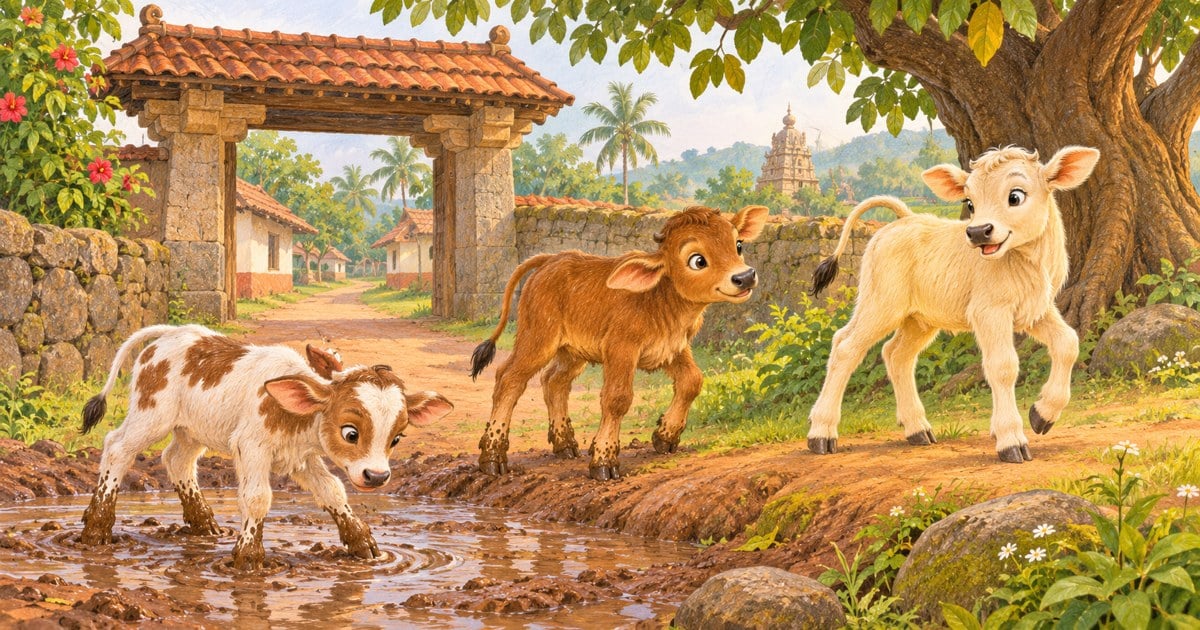
ಮಾಗಿಯ ಕಾಲ. ಹಳ್ಳಿಯೊಳಗಿನ ಜನರೆಲ್ಲ ಹಗಲುಹೊತ್ತನ್ನು ಬಹುಶಃ ಹೊಲದಲ್ಲಿಯೇ ಕಳೆಯುವರು. ದನಗಳು ಸಹ ಅಡವಿಯಲ್ಲಿಯೇ ಉಳಿಯುವವು. ಹಿಂಡುವ ದನಗಳು ಮಾತ್ರ ಸಾಯಂಕಾಲಕ್ಕೆ ಮನೆಗೆ ಮರಳುವವು.
ಮಧ್ಯಾಹ್ನವಾಗಿದ್ದರೂ ಚಳಿ ಹಿಮ್ಮೆಟ್ಟಿರದೆ. ಬಿಸಿಲು ಬೆಳದಿಂಗಳಾಗಿರುವಾಗ ಕಟ್ಟಿಹಾಕಿದ ಕರುಗಳನ್ನು, ತುಸು ಅಡ್ಡಾಡಿ ಬರಲೆಂದು ಕುಣಿಕೆ ಉಚ್ಚಿ ಬಿಡುವದುಂಟು. ಹಾಗೆ ಹೊರಬಿದ್ದ ಮೂರು ಆಕಳ ಕರುಗಳು ಅಗಸಿಯ ಬಳಿಯಲ್ಲಿ ಕೂಡಿದವು. ಒಂದು ಕರು ಒಕ್ಕಲಿಗರದು; ಇನ್ನೊಂದು ಉಪಾಧ್ಯರದು; ಮೂರನೆಯದು ಗೌಳಿಗರದು.
ಮೂರೂ ಕರುಗಳು ಜೊತೆಗೂಡಿ ಅಗಸಿಯಿಂದ ಹೊರಬಿದ್ದವು. ಮುಂದೆ ಬಚ್ಚಲ ಮೋರೆಯ ನೀರು ಹೊರಬಿದ್ದು, ಮದಿಲುಂಟುಮಾಡಿತ್ತು. ದಾರಿಹಿಡಿದು ಸಾಗುವವರು ಅದನ್ನು ದಾಟಬೇಕಾಗುತ್ತಿತ್ತು. ಎಲ್ಲಿಂದ ಹೇಗೆ ದಾಟಬೇಕು ಎಂದು ಯೋಚಿಸದೆ ಒಕ್ಕಲಿಗರ ಕರು ಬಾಲವನ್ನು ಎತ್ತರಿಸಿ ಚಟ್ಟನೆ ಜಿಗಿದು ಆಚೆಯ ಬದಿಯಲ್ಲಿ ನಿಂತಿತು. ಅದರಂತೆ ಜಿಗಿದು ಹೋಗುವ ಪ್ರಯತ್ನ ಮಾಡಿದರೂ ಉಪಾಧ್ಯರ ಕರುವಿನ ಹಿಂಗಾಲು ಕೆಸರು ತುಳಿದವು. ಇನ್ನೂಳಿದದ್ದು ಗೌಳಿಗರ ಕರು. ಅದು ಜಿಗಿದು ಹೋಗುವ ವಿಚಾರವನ್ನೇ ಮಾಡಲಿಲ್ಲ; ಪಚಲ್ ಕಚಲ್ ಎಂದು ಮದಿಲು ತುಳಿಯುತ್ತ ಅದನ್ನು ದಾಟಿಹೋಗಿ ಮುಂದಿನ ಕರುಗಳನ್ನು ಕೂಡಿಕೊಳ್ಳಲು ಧಾವಿಸಿತು.
ಅಷ್ಟರಲ್ಲಿ ಉಪಾಧ್ಯರ ಕರು ಕೇಳಿತು ಒಕ್ಕಲಿಗರ ಕರುವಿಗೆ - “ಏನೋ, ನೀನು ಕಾಲಿಗೆ ಕೆಸರು ಸೋಂಕದಂತೆ ಆ ಮದಿಲು ಹರಿಯನ್ನು ಚಟ್ಟನೆ ಜಿಗಿದು ಬಂದೆಯಲ್ಲ ! ಅಷ್ಟೊಂದು ಚಪಲತೆ ನಿನಗೆಲ್ಲಿಂದ ಬಂತು” ಎಂದು ಕೇಳಿತು.
ಒಕ್ಕಲಿಗರ ಕರು ಅಭಿಮಾನದಿಂದ ಹೇಳಿತು - “ನಮ್ಮವ್ವನಿಗಿರುವ ನಾಲ್ಕೂ ಮೊಲೆಗಳ ಹಾಲನ್ನೆಲ್ಲ ದಿನಾಲು ಎರಡೂ ಹೊತ್ತು ಕುಡಿಯುತ್ತೇನೆ. ಅದರಿಂದ ನನಗೆ ಅಷ್ಟೊಂದು ಕಸುವು ಬಂದಿದೆ.”
“ಏನಂದೀ ? ಅವ್ವನ ಮೊಲೆಯಲ್ಲಿ ಹಾಲಿರುತ್ತದೆಯೇ?” ಎಂದು ಉಪಾಧ್ಯರ ಕರು ಬೆಕ್ಕಸಬಿಟ್ಟು ಕೇಳಿತು.
ಅವೆರಡೂ ಕರುಗಳು ಮಾತಾಡುವದನ್ನು ಕೇಳಿ ಇದಾವ ಹೊಸವಿಷಯ ಎಂದು ಕುತೂಹಲದಿಂದ ಗೌಳಿಗರ ಕರು ಅವಸರದ ಹೆಜ್ಜೆ ಹಾಕಿ ಕೇಳಿತು - “ಅವ್ವನಿಗೆ ಮೊಲೆ ಇರುವವೇ?”
ತಮ್ಮ ಎಳೆಕರು ಬೆಲೆಯುಳ್ಳ ಬದುಕಾಗಲೆಂದು ಆಕಳನ್ನು ಹಿಂಡಿಕೊಳ್ಳದೆ ಇದ್ದಷ್ಟು ಹಾಲನ್ನು ಒಕ್ಕಲಿಗರು ಹೊರೆಗರುವಿಗೆ ಬಿಚ್ಚಿಕೊಡುತ್ತಾರೆ. ಉಪಾಧ್ಯರು ಹಾಲಿನ ಸಲುವಾಗಿ ಅವುಗಳನ್ನು ಕಟ್ಟುವದರಿಂದ ಅವರು, ಕೆಚ್ಚಲೊಳಗಿನ ಹಾಲನ್ನೆಲ್ಲ ಹಿಂಡಿಕೊಂಡು ಆಮೇಲೆ ಕರುವಿಗೆ ಬಿಡುವರು. ಅದು ಒಣ ಮೊಲೆಗಳನ್ನು ಚೀಪುವದು. ಅಂತೆಯೇ ಅದು ಕೇಳಿತು - “ಅವ್ವನ ಮೊಲೆಯಲ್ಲಿ ಹಾಲಿರುವವೇ” ಎಂದು.
ಇನ್ನು ಗೌಳಿಗರಂತೂ ಹಾಲು ಮಾರುವವರು. ಆಕಳ ಮೊಲೆಗಳನ್ನು ಜಗ್ಗಿ ಹಿಂಡಿಕೊಳ್ಳುವರಲ್ಲದೆ, ಹಿಂದುಗಡೆ ಸಹ ಕರುವನ್ನು ಬಿಡುವದಿಲ್ಲ. ಅಂತೆಯೇ ಗೌಳಿಗರ ಕರು ಕೇಳುತ್ತದೆ - “ಅವ್ವನಿಗೆ ಮೊಲೆ ಇರುವವೇ” ಎಂದು.
Section 2: Sentence-by-Sentence Translation
| # | Kannada | English |
|---|---|---|
| 1 | ಮಾಗಿಯ ಕಾಲ. | It was winter. |
| 2 | ಹಳ್ಳಿಯೊಳಗಿನ ಜನರೆಲ್ಲ ಹಗಲುಹೊತ್ತನ್ನು ಬಹುಶಃ ಹೊಲದಲ್ಲಿಯೇ ಕಳೆಯುವರು. | The villagers spent most of the daylight hours in their fields. |
| 3 | ದನಗಳು ಸಹ ಅಡವಿಯಲ್ಲಿಯೇ ಉಳಿಯುವವು. | The cattle, too, stayed out in the woodland. |
| 4 | ಹಿಂಡುವ ದನಗಳು ಮಾತ್ರ ಸಾಯಂಕಾಲಕ್ಕೆ ಮನೆಗೆ ಮರಳುವವು. | Only the cows that were milked returned home in the evening. |
| 5 | ಮಧ್ಯಾಹ್ನವಾಗಿದ್ದರೂ ಚಳಿ ಹಿಮ್ಮೆಟ್ಟಿರದೆ. | Even at noon, the cold had not retreated. |
| 6 | ಬಿಸಿಲು ಬೆಳದಿಂಗಳಾಗಿರುವಾಗ ಕಟ್ಟಿಹಾಕಿದ ಕರುಗಳನ್ನು, ತುಸು ಅಡ್ಡಾಡಿ ಬರಲೆಂದು ಕುಣಿಕೆ ಉಚ್ಚಿ ಬಿಡುವದುಂಟು. | When the sunshine was as pale as moonlight, the tethered calves would be untied and let out to wander a little. |
| 7 | ಹಾಗೆ ಹೊರಬಿದ್ದ ಮೂರು ಆಕಳ ಕರುಗಳು ಅಗಸಿಯ ಬಳಿಯಲ್ಲಿ ಕೂಡಿದವು. | Three calves let out in this way met near the village gateway. |
| 8 | ಒಂದು ಕರು ಒಕ್ಕಲಿಗರದು; ಇನ್ನೊಂದು ಉಪಾಧ್ಯರದು; ಮೂರನೆಯದು ಗೌಳಿಗರದು. | One calf belonged to a farming household, another to a Upadhya household, and the third to a milk-selling household. |
| 9 | ಮೂರೂ ಕರುಗಳು ಜೊತೆಗೂಡಿ ಅಗಸಿಯಿಂದ ಹೊರಬಿದ್ದವು. | The three calves went out through the gateway together. |
| 10 | ಮುಂದೆ ಬಚ್ಚಲ ಮೋರೆಯ ನೀರು ಹೊರಬಿದ್ದು, ಮದಿಲುಂಟುಮಾಡಿತ್ತು. | Ahead of them, water from a washing-area drain had run out and made a muddy patch. |
| 11 | ದಾರಿಹಿಡಿದು ಸಾಗುವವರು ಅದನ್ನು ದಾಟಬೇಕಾಗುತ್ತಿತ್ತು. | Anyone going along the path had to cross it. |
| 12 | ಎಲ್ಲಿಂದ ಹೇಗೆ ದಾಟಬೇಕು ಎಂದು ಯೋಚಿಸದೆ ಒಕ್ಕಲಿಗರ ಕರು ಬಾಲವನ್ನು ಎತ್ತರಿಸಿ ಚಟ್ಟನೆ ಜಿಗಿದು ಆಚೆಯ ಬದಿಯಲ್ಲಿ ನಿಂತಿತು. | Without wondering where or how to cross, the farmer’s calf lifted its tail, sprang across, and stood on the other side. |
| 13 | ಅದರಂತೆ ಜಿಗಿದು ಹೋಗುವ ಪ್ರಯತ್ನ ಮಾಡಿದರೂ ಉಪಾಧ್ಯರ ಕರುವಿನ ಹಿಂಗಾಲು ಕೆಸರು ತುಳಿದವು. | The Upadhya household’s calf tried to jump across in the same way, but its hind legs landed in the mud. |
| 14 | ಇನ್ನೂಳಿದದ್ದು ಗೌಳಿಗರ ಕರು. | The remaining calf belonged to the milk seller. |
| 15 | ಅದು ಜಿಗಿದು ಹೋಗುವ ವಿಚಾರವನ್ನೇ ಮಾಡಲಿಲ್ಲ; ಪಚಲ್ ಕಚಲ್ ಎಂದು ಮದಿಲು ತುಳಿಯುತ್ತ ಅದನ್ನು ದಾಟಿಹೋಗಿ ಮುಂದಿನ ಕರುಗಳನ್ನು ಕೂಡಿಕೊಳ್ಳಲು ಧಾವಿಸಿತು. | It did not even think of jumping; it squelched through the mud and hurried to join the calves ahead. |
| 16 | ಅಷ್ಟರಲ್ಲಿ ಉಪಾಧ್ಯರ ಕರು ಕೇಳಿತು ಒಕ್ಕಲಿಗರ ಕರುವಿಗೆ - “ಏನೋ, ನೀನು ಕಾಲಿಗೆ ಕೆಸರು ಸೋಂಕದಂತೆ ಆ ಮದಿಲು ಹರಿಯನ್ನು ಚಟ್ಟನೆ ಜಿಗಿದು ಬಂದೆಯಲ್ಲ ! ಅಷ್ಟೊಂದು ಚಪಲತೆ ನಿನಗೆಲ್ಲಿಂದ ಬಂತು” ಎಂದು ಕೇಳಿತು. | Then the Upadhya household’s calf asked the farmer’s calf, “Hey, you sprang across that muddy stream without getting mud on your feet! Where did you get such agility?” |
| 17 | ಒಕ್ಕಲಿಗರ ಕರು ಅಭಿಮಾನದಿಂದ ಹೇಳಿತು - “ನಮ್ಮವ್ವನಿಗಿರುವ ನಾಲ್ಕೂ ಮೊಲೆಗಳ ಹಾಲನ್ನೆಲ್ಲ ದಿನಾಲು ಎರಡೂ ಹೊತ್ತು ಕುಡಿಯುತ್ತೇನೆ. | The farmer’s calf said proudly, “I drink all the milk from my mother’s four teats twice every day. |
| 18 | ಅದರಿಂದ ನನಗೆ ಅಷ್ಟೊಂದು ಕಸುವು ಬಂದಿದೆ.” | That is how I have become so strong.” |
| 19 | “ಏನಂದೀ ? ಅವ್ವನ ಮೊಲೆಯಲ್ಲಿ ಹಾಲಿರುತ್ತದೆಯೇ?” ಎಂದು ಉಪಾಧ್ಯರ ಕರು ಬೆಕ್ಕಸಬಿಟ್ಟು ಕೇಳಿತು. | “What did you say? Is there milk in Mother’s teats?” the Upadhya household’s calf asked in amazement. |
| 20 | ಅವೆರಡೂ ಕರುಗಳು ಮಾತಾಡುವದನ್ನು ಕೇಳಿ ಇದಾವ ಹೊಸವಿಷಯ ಎಂದು ಕುತೂಹಲದಿಂದ ಗೌಳಿಗರ ಕರು ಅವಸರದ ಹೆಜ್ಜೆ ಹಾಕಿ ಕೇಳಿತು - “ಅವ್ವನಿಗೆ ಮೊಲೆ ಇರುವವೇ?” | Hearing the two calves talking, the milk seller’s calf hurried over, curious about this unfamiliar matter, and asked, “Does Mother have teats?” |
| 21 | ತಮ್ಮ ಎಳೆಕರು ಬೆಲೆಯುಳ್ಳ ಬದುಕಾಗಲೆಂದು ಆಕಳನ್ನು ಹಿಂಡಿಕೊಳ್ಳದೆ ಇದ್ದಷ್ಟು ಹಾಲನ್ನು ಒಕ್ಕಲಿಗರು ಹೊರೆಗರುವಿಗೆ ಬಿಚ್ಚಿಕೊಡುತ್ತಾರೆ. | Wanting their young calf to grow into a valuable animal, the farmers do not milk the cow; they leave all her milk for the calf. |
| 22 | ಉಪಾಧ್ಯರು ಹಾಲಿನ ಸಲುವಾಗಿ ಅವುಗಳನ್ನು ಕಟ್ಟುವದರಿಂದ ಅವರು, ಕೆಚ್ಚಲೊಳಗಿನ ಹಾಲನ್ನೆಲ್ಲ ಹಿಂಡಿಕೊಂಡು ಆಮೇಲೆ ಕರುವಿಗೆ ಬಿಡುವರು. | The Upadhya household keeps cows for their milk, so they milk the udder dry before letting the calf suckle. |
| 23 | ಅದು ಒಣ ಮೊಲೆಗಳನ್ನು ಚೀಪುವದು. | It sucks the dry teats. |
| 24 | ಅಂತೆಯೇ ಅದು ಕೇಳಿತು - “ಅವ್ವನ ಮೊಲೆಯಲ್ಲಿ ಹಾಲಿರುವವೇ” ಎಂದು. | That is why it asked, “Is there milk in Mother’s teats?” |
| 25 | ಇನ್ನು ಗೌಳಿಗರಂತೂ ಹಾಲು ಮಾರುವವರು. | The milk sellers, meanwhile, sell milk. |
| 26 | ಆಕಳ ಮೊಲೆಗಳನ್ನು ಜಗ್ಗಿ ಹಿಂಡಿಕೊಳ್ಳುವರಲ್ಲದೆ, ಹಿಂದುಗಡೆ ಸಹ ಕರುವನ್ನು ಬಿಡುವದಿಲ್ಲ. | They not only pull at the cow’s teats and milk her, but do not even let the calf go behind her. |
| 27 | ಅಂತೆಯೇ ಗೌಳಿಗರ ಕರು ಕೇಳುತ್ತದೆ - “ಅವ್ವನಿಗೆ ಮೊಲೆ ಇರುವವೇ” ಎಂದು. | That is why the milk seller’s calf asks, “Does Mother have teats?” |
Section 3: Vocabulary
ಕೆಲವು ಪದಗಳನ್ನು ಮೂಲರೂಪದಲ್ಲಿ ನೀಡಲಾಗಿದೆ. Some entries use the base form rather than the ending found in the story.
| Kannada | English letters | Part of speech | Meaning |
|---|---|---|---|
| ಮಾಗಿ | maagi | Noun | winter |
| ಹಳ್ಳಿ | halli | Noun | village |
| ಹೊಲ | hola | Noun | field |
| ದನ | dana | Noun | head of cattle; cow |
| ಆಕಳು | aakalu | Noun | cow |
| ಕರು | karu | Noun | calf |
| ಚಳಿ | chali | Noun | cold |
| ಬಿಸಿಲು | bisilu | Noun | sunshine |
| ಬೆಳದಿಂಗಳು | beladingalu | Noun | moonlight |
| ಅಗಸಿ | agasi | Noun | village gateway |
| ಒಕ್ಕಲಿಗ | okkaliga | Noun | farmer; cultivator |
| ಉಪಾಧ್ಯ | upaadhya | Noun | Upadhya; a household designation in the story |
| ಗೌಳಿಗ | gouliga | Noun | dairy worker or milk seller |
| ಕೆಸರು | kesaru | Noun | mud |
| ಬಾಲ | baala | Noun | tail |
| ಹಿಂಗಾಲು | hingaalu | Noun | hind leg |
| ಚಪಲತೆ | chapalate | Noun | agility; nimbleness |
| ಕಸುವು | kasuvu | Noun | strength |
| ಕುತೂಹಲ | kutoohala | Noun | curiosity |
| ಕೆಚ್ಚಲು | kechchalu | Noun | udder |
| ಹಾಲು | haalu | Noun | milk |
| ಮೊಲೆ | mole | Noun | teat, here |
| ಚೀಪು | cheepu | Verb | to suck |
| ಅವ್ವ | avva | Noun | mother |
In this North Karnataka folktale, ಮದಿಲು means a muddy patch, ಅಗಸಿ is a village gateway, and ಅವ್ವ means mother. In the Roman reading aid, aa, ee and oo mark long vowels; l can represent both ಲ and the curled-tongue ಳ.
Source: “ಮೂರು ಆಕಳ ಕರುಗಳು” from ಉತ್ತರ ಕರ್ನಾಟಕದ ಜನಪದ ಕಥೆಗಳು, compiled by Simpi Linganna, pp. 166–167 (© Government of Karnataka, 2011 edition), CC BY-SA 3.0. Original Kannada preserved; English translation, Roman reading aid, learning notes and narrated adaptation by LangFastPro are shared under the same licence. The new illustration is separate from the source work.