കഥകളിലൂടെ മലയാളം പഠിക്കാം.
Section 1: Malayalam Story
ഉപ്പു കച്ചവടക്കാരന്റെ കഴുത — The Salt Merchant’s Donkey
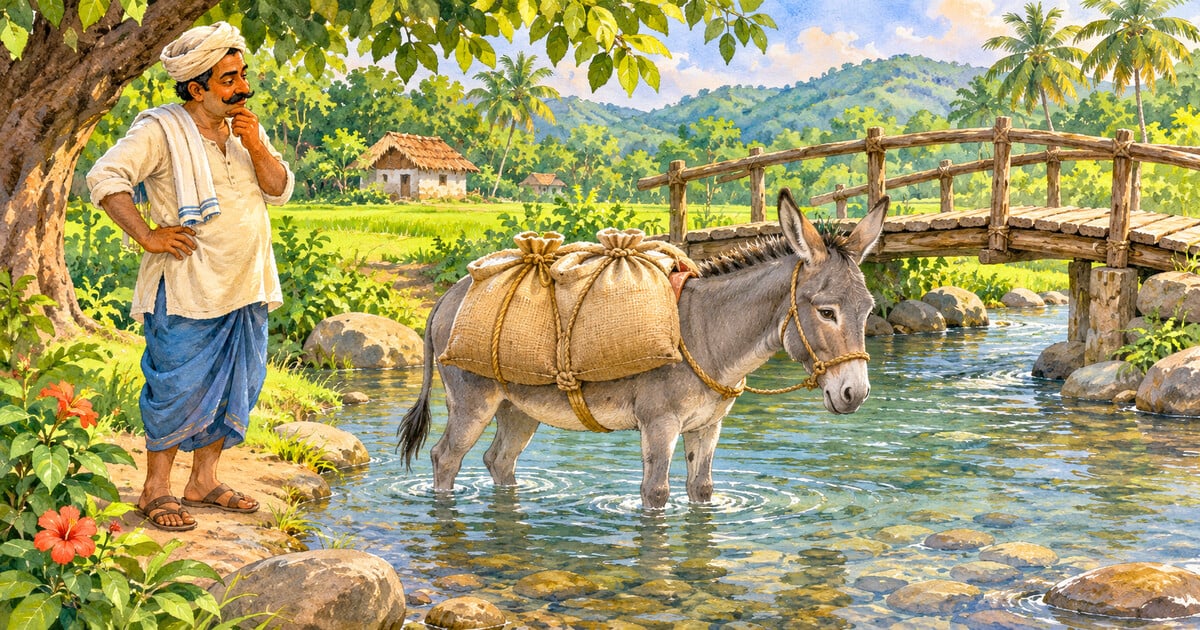
ഉപ്പു കച്ചവടം നടത്തിയിരുന്ന ഒരാൾക്ക് ഒരു ചുമട്ടു കഴുത ഉണ്ടായിരുന്നു. ഒരു ദിവസം പതിവുപോലെ ഉപ്പുചാക്കുകളുമായി ഒരു പാലം കടക്കവേ, ഓർക്കാപ്പുറത്ത് കഴുതയുടെ അടിതെറ്റി. അത് ചുമടുമായി ആറ്റിൽ വീണു. നീന്തിക്കയറിയ കഴുതയുടെ ചുമടുഭാരം ഗണ്യമായി കുറഞ്ഞിരുന്നു. കാരണം ഉപ്പെല്ലാം വെള്ളത്തിൽ അലിഞ്ഞിരുന്നു.
സംഗതി മനസ്സിലാക്കിയ കഴുത അടുത്ത ദിവസം പാലംകടക്കവേ കാൽ ഇടറുന്നതായി അഭിനയിച്ചു മനഃപൂർവ്വം വെള്ളത്തിലേക്ക് വീണു. കഴുതയുടെ വിരുത് യജമാനൻ തിരിച്ചറിഞ്ഞു.
അടുത്ത ദിവസം കഴുത മനപ്പൂർവ്വം വെള്ളത്തിൽ വീണെങ്കിലും കയറാൻ ഏറെ പാടുപെടേണ്ടി വന്നു. കുറെ വെള്ളവും കുടിച്ചു. ചുമടാകട്ടെ ഭാരത്തിൽ ഇരട്ടിയായതായി തോന്നുകയും ചെയ്തു. കാരണം അന്ന് യജമാനൻ ഉപ്പിനു പകരം പഞ്ഞിനിറച്ച ചാക്കായിരുന്നു ചുമടായി വെച്ചിരുന്നത്. പാഠം പഠിച്ച കഴുത പിന്നിടൊരിക്കലും ചുമടു താങ്ങാൻ വൈമനസ്യം കാട്ടിയില്ല.
ഗുണപാഠം: മടിയന്മാർ മല ചുമക്കും
Section 2: Sentence-by-Sentence Translation
| # | Malayalam (മലയാളം) | English Translation |
|---|---|---|
| 1 | ഉപ്പു കച്ചവടം നടത്തിയിരുന്ന ഒരാൾക്ക് ഒരു ചുമട്ടു കഴുത ഉണ്ടായിരുന്നു. | A man who traded in salt had a donkey to carry his loads. |
| 2 | ഒരു ദിവസം പതിവുപോലെ ഉപ്പുചാക്കുകളുമായി ഒരു പാലം കടക്കവേ, ഓർക്കാപ്പുറത്ത് കഴുതയുടെ അടിതെറ്റി. | One day, while crossing a bridge with sacks of salt as usual, the donkey unexpectedly lost its footing. |
| 3 | അത് ചുമടുമായി ആറ്റിൽ വീണു. | It fell into the river with its load. |
| 4 | നീന്തിക്കയറിയ കഴുതയുടെ ചുമടുഭാരം ഗണ്യമായി കുറഞ്ഞിരുന്നു. | When the donkey swam out, its load had become much lighter. |
| 5 | കാരണം ഉപ്പെല്ലാം വെള്ളത്തിൽ അലിഞ്ഞിരുന്നു. | That was because all the salt had dissolved in the water. |
| 6 | സംഗതി മനസ്സിലാക്കിയ കഴുത അടുത്ത ദിവസം പാലംകടക്കവേ കാൽ ഇടറുന്നതായി അഭിനയിച്ചു മനഃപൂർവ്വം വെള്ളത്തിലേക്ക് വീണു. | Having understood what had happened, the donkey pretended to stumble while crossing the bridge the next day and deliberately fell into the water. |
| 7 | കഴുതയുടെ വിരുത് യജമാനൻ തിരിച്ചറിഞ്ഞു. | Its owner saw through the donkey’s trick. |
| 8 | അടുത്ത ദിവസം കഴുത മനപ്പൂർവ്വം വെള്ളത്തിൽ വീണെങ്കിലും കയറാൻ ഏറെ പാടുപെടേണ്ടി വന്നു. | The next day, the donkey deliberately fell into the water again, but struggled hard to climb out. |
| 9 | കുറെ വെള്ളവും കുടിച്ചു. | It also swallowed quite a bit of water. |
| 10 | ചുമടാകട്ടെ ഭാരത്തിൽ ഇരട്ടിയായതായി തോന്നുകയും ചെയ്തു. | Its load seemed to have doubled in weight. |
| 11 | കാരണം അന്ന് യജമാനൻ ഉപ്പിനു പകരം പഞ്ഞിനിറച്ച ചാക്കായിരുന്നു ചുമടായി വെച്ചിരുന്നത്. | That was because its owner had loaded it with a sack filled with cotton instead of salt that day. |
| 12 | പാഠം പഠിച്ച കഴുത പിന്നിടൊരിക്കലും ചുമടു താങ്ങാൻ വൈമനസ്യം കാട്ടിയില്ല. | Having learned its lesson, the donkey never again showed reluctance to carry its load. |
| 13 | ഗുണപാഠം: മടിയന്മാർ മല ചുമക്കും | Moral: Lazy people end up carrying mountains. |
Section 3: Vocabulary
പദങ്ങൾ / Useful words
ചില പദങ്ങൾ കഥയിൽ കാണുന്ന രൂപത്തിൽനിന്ന് വ്യത്യസ്തമായി അടിസ്ഥാനരൂപത്തിലാണ് നൽകിയിരിക്കുന്നത്.
Some entries use the word’s base form rather than the ending found in the story. Roman spellings are simple reading aids.
| Malayalam (മലയാളം) | Transliteration | Part of Speech | English Meaning |
|---|---|---|---|
| ഉപ്പ് | uppu | noun | salt |
| കച്ചവടം | kachchavadam | noun | trade; business |
| കഴുത | kazhutha | noun | donkey |
| ചുമട് | chumadu | noun | load |
| ചാക്ക് | chaakku | noun | sack |
| പാലം | paalam | noun | bridge |
| കടക്കുക | kadakkuka | verb | to cross |
| പതിവുപോലെ | pathivupole | adverb | as usual |
| ആറ് | aaru | noun | river |
| വീഴുക | veezhuka | verb | to fall |
| നീന്തുക | neenthuka | verb | to swim |
| ഭാരം | bhaaram | noun | weight |
| കുറയുക | kurayuka | verb | to decrease |
| വെള്ളം | vellam | noun | water |
| അലിയുക | aliyuka | verb | to dissolve |
| അഭിനയിക്കുക | abhinayikkuka | verb | to act; to pretend |
| യജമാനൻ | yajamaanan | noun | owner; master |
| തിരിച്ചറിയുക | thirichariyuka | verb | to recognise |
| പഞ്ഞി | panji | noun | cotton |
| പകരം | pakaram | postposition | instead of |
| പാഠം | paatham | noun | lesson |
| വൈമനസ്യം | vaimanasyam | noun | reluctance |
| മടിയൻ | madiyan | noun | lazy person |
| മല | mala | noun | mountain |
വായനക്കുറിപ്പ് / Reading note: “മടിയന്മാർ മല ചുമക്കും” എന്നത് ജോലി ഒഴിവാക്കാൻ നോക്കുമ്പോൾ കൂടുതൽ കഷ്ടപ്പെടേണ്ടിവരും എന്നർത്ഥമുള്ള പഴഞ്ചൊല്ലാണ്. The moral is a proverb: trying to avoid work can leave you with even more work.
Continue your Malayalam learning journey with these related lessons:
Source: ഉപ്പു കച്ചവടക്കാരന്റെ കഴുത, an Aesop fable in Malayalam by Wikisource contributors, based on George Fyler Townsend’s version, CC BY-SA 4.0. Malayalam wording retained; layout changed. English translation and learning notes by LangFastPro under the same licence.